In today’s burgeoning wellness market, the demand for authentic and effective Ayurvedic products is stronger than ever. For entrepreneurs seeking a stable and rewarding business venture in this sector, the pcd franchise model offers a compelling pathway. Among the numerous players in this space, Elzac Herbals emerges as a leading Ayurvedic PCD franchise company, dedicated to providing high-quality products and empowering its partners for success.
Based in vpo Gheer, Karnal, Haryana, India, Elzac Herbals has been a trusted name in the Ayurvedic and herbal market for over a decade. Since its inception, the company has focused on formulating and manufacturing a comprehensive range of Ayurvedic medicines, herbal supplements, and personal care products, adhering to stringent quality standards and traditional Ayurvedic principles.
Why Choose Elzac Herbals for Your Ayurvedic PCD Franchise?
A Legacy of Trust and Quality: With years of experience in the Ayurvedic domain, Elzac Herbals has built a strong reputation for the efficacy and purity of its products. We are committed to sourcing the finest quality herbs and employing modern manufacturing practices under strict quality control measures.
Extensive Product Portfolio: Our diverse product range caters to a wide spectrum of health and wellness needs. From classical Ayurvedic formulations to innovative herbal blends, Elzac Herbals offers products in categories such as immunity boosting, digestive health, skincare, hair care, and more. This comprehensive portfolio allows our franchise partners to effectively address the diverse demands of their local markets. Download Brochure: Product Catalog PDF
Lucrative PCD Franchise Model: Elzac Herbals offers a transparent and mutually beneficial PCD franchise model. We provide our partners with exclusive distribution and marketing rights within a defined territory, minimizing competition and maximizing earning potential. Visit Franchise Page
Comprehensive Support System: We understand that the success of our partners is intrinsically linked to our own. Therefore, Elzac Herbals provides extensive support to its franchise associates, including:
Product Training: In-depth knowledge about our products, their benefits, and usage.
Marketing Materials: Professionally designed visual aids, product literature, and promotional strategies to aid your marketing efforts.
Sales Support: Guidance and strategies to effectively promote and sell our products.
Regular Updates: Information on new product launches and market trends.
Ethical Business Practices: At Elzac Herbals, we believe in conducting business with integrity and transparency. We foster a strong and ethical partnership with our franchise associates, built on mutual trust and respect.
Growth Potential in a Booming Market: The global Ayurvedic market is experiencing significant growth, driven by increasing awareness of natural and holistic healthcare solutions. By partnering with Elzac Herbals, you tap into this expanding market and position yourself for long-term success.
Empowering Entrepreneurs in Uchana and Beyond:
Being based in Karnal, Haryana, Elzac Herbals is deeply committed to contributing to the economic growth of the region. Our PCD franchise opportunities extend not only across India but also exports to many regions of world.
Take the First Step Towards a Healthier Future:
If you are passionate about Ayurveda and are looking for a reliable and rewarding business opportunity, partnering with Elzac Herbals as a PCD franchise associate could be the perfect venture for you. Join our network of dedicated professionals and contribute to spreading the benefits of authentic Ayurvedic wellness.
Contact us today to learn more about our Ayurvedic PCD franchise opportunities and how you can become a part of the Elzac Herbals family. Follow the following steps:
Starting a pharmaceutical company can be a lucrative business option for individuals who possess industry experience or knowledge. A pharmaceutical company may engage in various facets such as research, manufacturing, trading, distribution, and marketing. This article specifically focuses on the process of starting a pharmaceutical company that operates in the domains of pharma marketing, trading, and distribution.
In India, the pharmaceutical sector is highly regulated and governed by the Drug and Cosmetic Act & Rules, which oversee the import, manufacture, distribution, and sale of drugs and cosmetics. Therefore, acquiring a license from the drug office, commonly known as a drug license, is mandatory to operate any type of business in the pharmaceutical industry.
For starting a pharmaceutical company that entails manufacturing, obtaining a Drug Manufacturing License from the state drug control authority is essential. Conversely, for marketing, trading, and distribution, a Wholesale drug license number is required. For operating a retail shop or pharmacy, a Retail Drug License Number must be acquired.
This article intends to provide a comprehensive guide for establishing a pharmaceutical company in India, covering all aspects from prerequisites, registration, licenses, qualifications, investment requirements, and establishment procedures. We highly recommend individuals to have prior experience in the pharmaceutical industry or possess fundamental knowledge of the pharmaceutical field before embarking on the journey of setting up a pharmaceutical company.
Depending on an individual’s area of expertise, the type of pharmaceutical company that should be established can vary. Individuals with experience in pharmaceutical manufacturing should consider setting up a manufacturing plant. Conversely, those with sales and marketing experience should consider starting a marketing company, while individuals with experience in research and drug development may opt for a pharmacy company related to their field.
Prerequisites:
Starting a pharmaceutical company requires several prerequisites. These include:
Prior experience or knowledge: It is essential to have prior experience or knowledge of the pharmaceutical industry before starting a company in this field. This will help individuals make informed decisions and navigate the complex regulations and requirements.
Business plan: Developing a comprehensive business plan is crucial for a successful pharmaceutical company. The business plan should cover all aspects of the company, including financial projections, marketing strategies, and operational procedures.
Registration: The first step in starting a pharmaceutical company is registering the business. This involves obtaining a unique company name, registering with the Registrar of Companies, and acquiring a PAN card and TAN number.
Licenses: Acquiring the necessary licenses is vital for operating a pharmaceutical company. This includes obtaining a drug license, drug manufacturing license, wholesale drug license, and retail drug license number, depending on the type of company.
Qualified personnel: Hiring qualified personnel is crucial for the success of a pharmaceutical company. This includes hiring pharmacists, chemists, sales representatives, and administrative staff.
Location: Choosing the right location is essential for a pharmaceutical company. The location should be easily accessible, have adequate infrastructure, and comply with all regulatory requirements.
Investment: Starting a pharmaceutical company requires significant investment. Individuals should have a clear understanding of the financial requirements and secure funding from investors or financial institutions.
Step wise process to open a pharma company:
To establish a pharmaceutical business, one should possess experience in pharmaceutical sales and marketing or recruit staff with relevant experience.
Preparing a project report or consulting with pharmaceutical experts can help develop a comprehensive business plan.
Choosing a suitable location, whether rented or owned, that meets government regulations in terms of space and necessary licenses and stock is crucial.
Financing options should be explored, including personal savings, bank loans, or investments.
Conducting research and compiling a list of molecules and combinations, such as general, pediatric, cardiac, and oncology, is essential in determining the products to be offered.
Selecting a unique company name and brand names for products, avoiding similarity with existing companies or brands in the market, is necessary. The names can be verified using the search function available at http://ipindiaonline.gov.in/tmrpublicsearch/frmmain.aspx, with trade names classified in class 5 and company names in class 35.
You can choose to Register the business as a private limited, one-person private limited, limited liability partnership, or a firm, such as proprietorship or partnership.
Recruitment of a registered competent person or pharmacist, as per norms, is necessary as an authorized person for taking drug licenses.
Application for a drug license number must be submitted with all required documents at the district drug control office, either manually or online, in compliance with state policies, using the same name as the company or firm registration.
Once the drug license number is received, application for a GST number is necessary.
Identifying third-party manufacturers or contract manufacturers or loan licensee.
Make an agreement/contract with the manufacturer.
Finalizing packaging, design material, completing payment and other formalities, and transportation should be coordinated with the manufacturer.
After the products are ready, the manufacturer will inform and send a Performa invoice, which typically takes around 30 to 45 days for new products.
The remaining payment is required before dispatching the product to the billing address, and marketing, promoting, and distributing the pharmaceutical products can begin.
Qualification and
Eligibility for EP or competent person:
A Competent person is a person that is authorized to conduct all operation of pharmaceutical marketing company. He/she should possess either one qualification from followings:
Minimum one year experience at wholesale drug
licensed firm after graduation with proof acceptable by drug licensing authority.
licenses required for pharmaceutical company in India:
To set up your pharmaceutical company and start marketing, trading, and distributing your products, you’ll need to obtain various registrations and licenses. The most crucial ones are the Wholesale Drug Licence (D.L. No.) and Goods and Services Tax (GST) registration. Additionally, it’s highly recommended that you obtain voluntary licenses and registrations, such as Company or Firm Registration, Trade Mark Registration, and FSSAI Registration etc
Wholesale Drug License:
Wholesale Drug License is the licence to sell stock or exhibit or offer for sale, or distribute by wholesale means. It also covers distribution, trading also. Marketing and promotion can be done with any restriction but when it come to receive medicines from pharmaceutical manufacturing company, stocking it, supply to stockiest, distributor, retail pharmacies etc, you will require to have a wholesale drug license to raise invoice to them.
Some companies receive stock and invoice at any other pharmaceutical
wholesale firm. This could be one another way to skip wholesale drug
license but authenticity of doing business by this mean in not confirmed
(whether legal or not) but being conducted by many pharmaceutical companies.
You will require taking different licenses for wholesale
depend at Schedule under Drug and Cosmetic Act & rules in which a drug is
covered marketed by your pharmaceutical company. List of these licenses are as
follow:
Licence on Form 20-B for wholesale of drugs other than those specified in Schedule C, C(1) and X and application is to be submitted on Form-19.
Licence on Form 21-B for wholesale of drugs specified in Schedule C & C(1) and application is to be submitted on Form-19.
Licence on Form 20-G for wholesale of drugs Specified in Schedule ‘X’ and application is to be submitted on Form-19-C.
Documents and
Requirements for Drug License:
District Drug Control office would provide you full details
of requirement for a whole sale drug license. Few we are describing here.
Procedure and details for applying for D.L. number may be changed with respect
to any governmental policy change.
Application will be submitted in form no. 19
with other detailed information forms.
You or your partner (if any) should be a
registered pharmacist or Experienced Person (Duly registered under local
authorities) or competent person. If you don’t have any of above qualification
than you can appoint or hire a registered pharmacist or EP (Experienced Person)
and make him authorized to handle all work on your behalf ( Appointment letter
will be submitted with application)
Premises size should have minimum of 10 square
meter area (requirement of area may vary) and should have single
premises.
Affidavits
Fees ( mode of fee and prescribed fee may
vary)
Blue print or layout of Premises
Freeze purchase bill copy with complete
address
Air Conditioner if applicable
Ownership or Rent agreement deed of
premises.
Electricity bill of premises.
Affidavit of proprietor, partner, pharmacist, EP
etc.
Firm registration receipt in case private
limited firm. List of directors, address proof, article of association etc is
also to submit with application form
Partnership deed if any
Any other documents as asked by local drug
controller etc.
After submission of documents, inspection will be carried
out by local drug authority for accuracy and correctness of detail submitted
with the application form. Drug authority reserves the right to approve or
reject your application if not satisfy with application.
If Drug officer is satisfied with your application, he/she will precede further it for issuing of drug license. After issuing of drug license number for sale of drugs for which you have applied will be granted. After that you are permitted to sale, purchase, distribute, supply of drugs at wholesale basis.
Goods and Service Tax Identification number
Goods and Service Tax
Identification number, in short ‘GST number’ is mandatory for turnover
above 40 lakhs or inter-state supply of goods. In both cases, either you have
above 40 lakhs turnover or have stockist or distributors in other states to
whom you have to supply then you have to apply for Goods and Service Tax
number. If you don’t fall under these terms then you can skip to take GST
number
Licensing authority for wholesale drug license is District Drug Control Officer or any other officer appointed by state drug control authority. GST number can be applied by visiting GST portal provided by state government or centre government.
Documents and Requirements
for Goods and Service Tax Registration (GST) for Pharma Company:
For applying for GST Registration, you need to visit GST
portal and apply for it. But if you want to reduce burden for applying GST
number by yourself you can apply through any sale tax accountant or chartered
accountant. They will charge a minimal fee and will apply GST number for your
firm/company.
General procedure for applying GST number is as follow:
There will be the two options: New User and Existing User
Click at New User
Enter your detail for apply GST
Enter you mobile number and Email Address of the authorized signatory of the business entity. This number and e-mail will be used for all future communication from the GST portal
You will receive a OTP at mobile number and e-mail id you entered in previous step
Enter this OTP.
After that follow all steps and enter information and scanned images as mentioned in Provisional registration form
Documents required
for applying for GSTIN:
Digital Signature Certificate (Class II)
Address Proof of Business Entity
Proprietor/Partners/Directors Address
Proof
Aadhaar Card, PAN and Image etc
Ownership Proof or Rent agreement
Partnership deed or memorandum of
association/certificate of incorporation
Back Statement and Bank Detail
Company Registration or Firm Registration
Company Registration or Firm Registration is not as important as above mentioned requirements. You can skip these both easily if you have a proprietorship business. You can just take wholesale drug license and gst number, and start you pharmaceutical marketing business.
But if you are two or more partners then it become more important to register your company as private limited company or Limited Liability Partnership Company or register your firm under state government act & rules. This helps and prevents any future dispute and claim if occur.
Documents and Requirements to register a Pharmaceutical Company under Company Act:
For registering a pharma company under Company Act, applying
through a chartered accountant is good way. Follow documents will be require
for company registration:
Address Proof (Bank Statement / Mobile Bill /
Telephone)
Rent Agreement (Notarised: For rented property)
or Ownership proof
Latest Electricity Bill
MOA(Memorandum Of Association) or/andAOA
(Article Of Association)
NOC if required
Trademark Registration
Trademark Registration is not compulsory but an essential aspect to prevent use of your intellectual property i.e. company name, brand name by any other individual or company. You should apply for trademark registration for at least your company name and major brand names.
Documents and
Requirements for Trademark Registration:
TM-48 Form
Assignment Form
Name and/or Logo with description
Owner Detail (Individual/Firm/Company)
Nature of Product/Service
Class in which want to apply
FSSAI registration or license
FSSAI registration or license will be required to obtain if you are also dealing in food and dietary supplement products along with pharmaceutical products. Some of commonly used food supplements by pharmaceutical company are lycopene products, omega 3 fatty acid, calcium supplements, vitamin preparation, enzymatic products etc. You should apply for FSSAI registration if you deal in any one of food supplement product.
Documents and
Requirements for FSSAI Registration/License:
Documents to be enclosed for New Application for License to
State Licensing Authority:
Form-B Duly completed and signed
List of Directors/Partners/Proprietor
Photo I.D and address proof issued by Government
authority of Proprietor/Partner/Director(s)/Authorised Signatory
List of food category desired
Authority letter with name and address of responsible person
nominated
Proof of possession of premises. (Sale deed/
Rent agreement/ Electricity bill, etc.) (op_onal)
Partnership Deed/Affidavit of Proprietorship/Memorandum
& Articles of Association
Food Safety Management System plan or certificate
(if any)
Investment Required
for Starting Pharmaceutical Company:
Three types of investment is generally required for
pharmaceutical marketing company:
Fixed Investment
Capital Investment
Inventory Investment
Fixed Investment
for pharma marketing company includes Premises/shop/office, Furniture and accessories,
Computer and electronic equipments, Fitting and Furnishing, Amount paid for
licenses and registration, any other requirements cost etc.
Capital investment
includes rent and bills, staff salary and daily expenses, bank loan instalments,
promotional and marketing expenditure and others.
Inventory investment
includes much investment at Stock of goods.
There are many marketing and promotional ways you can establish your pharmaceutical company. But you need to decide which type of marketing you want to do and establish your marketing strategy effectively. You can choose either one or two or more from ethical/branded medicine marketing, generic medicine marketing, franchise distribution, supply to institutions, over the counter marketing, supply to pharmacy chains, online pharmacies or export etc. Below in scope section we have provided links to know more about each marketing type and get more knowledge about these. Read: How to be successful in pharma business? Check out: How to build brand and boost pharma sale?
Third Party Manufacturing, Contract Manufacturing and Loan License Manufacturing:
Getting Manufactured own brand name products from pharmaceutical manufacturer is an integral part of pharmaceutical marketing company. For manufacturing of own brands from manufacturer, we can choose from either of third party manufacturing, contract manufacturing or loan licensing. Third party manufacturing and contract manufacturing is easiest and simple way, and similar in many aspect where as loan licensing is somewhat difficult and requires lot of formalities.
Third Party manufacturing is a way to get manufactured own
medicines brand products from pharma manufacturer at specification available at
manufacturer where as in contract manufacturing, marketing company get
manufactured products at customized terms and specifications.
In both cases, marketing company’s name and address will be
shown as ‘Marketed by’, ‘manufactured for’ and other related terms. And
pharmaceutical manufacturing company address and name that is providing products
will be shown as ‘manufactured by’, ‘mfg by’ along with drug manufacturing
license number etc. Batch number, mfg date, exp date etc will be shown by
manufacturing company. MRP will be decided by marketing company or control
under DPCO.
In case of loan licensing, pharma manufacturing company provides
its own manufacturing facility to pharma marketing company to conduct
manufacturing of own products. Marketing company works as a manufacturer in
manufacturing company’s manufacturing facility. For this manufacturing company
has to apply at state drug licensing authority for granting a loan license to
marketing company at its premises.
In Loan licensing, ‘manufactured by and marketed by’ both
will be shown of marketing company along with loan license number. Batch number,
mfg date, exp date etc is also the responsibility of marketing company. MRP
will be decided by marketing company or control under DPCO.
Active Pharmaceutical Ingredients and other raw material trading business
Medical Devices and Surgical Dressing business
Q&A Related to pharma Company:
Q&A:
Question: How can I start my own pharmaceutical company? Answer: You can start your own pharmaceutical company by completing licenses and documents. For marketing company, you will require having Company registration, wholesale drug license and Gst number. For Manufacturing company, you need to have company registration, medicine manufacturing license, wholesale drug license and gst number.
Question: Which degree is required to open a pharmaceutical company? Answer: For being an owner of a pharmaceutical company, you don’t need to have any specific qualification. You can hire person having qualification required for taking medicine manufacturing license or wholesale drug license. For detail of qualification required for pharmaceutical company check here
Question: Where to register a pharma company? Answer: You will take four licenses and registration for manufacturing company and three for pharma marketing company i.e., company registration, wholesale drug license, medicine manufacturing license and gst number. These registrations and licenses are your registration of a pharmaceutical company. By completing this you can start your pharmaceutical company.
Question: How to apply for pharmaceutical companies? Answer: You above mentioned licenses and registrations are equal to applying for pharmaceutical company.
Question: What is the pharma marketing company registration process in India? Answer: For registration of pharma marketing company, first register your company under company act i.e., company registration. After that you need to take wholesale drug license and Goods & Service Tax identification number.
Question: Can a doctor start a pharmaceutical company? Answer: Yes, a doctor can start a pharmaceutical company by same process.
Question: How to start a generic pharmaceutical company in India? Answer: For starting a generic pharmaceutical company, you need to follow the same process. Generic and branded medicines are two marketing types, not company types. All pharmaceutical companies have same starting process, only you can choose by which marketing type you want to sell your products – whether as branded medicine or generic medicines.
Question: Area required for pharmaceutical marketing industry? Answer: For pharmaceutical marketing company, minimum of 100 square feet area is required for completing documents and licensing process.
Question: How do I launch a new pharmaceutical product? Answer: For launching a new pharmaceutical product in your pharma marketing company, you need to have contact with pharmaceutical manufacturing unit. You can contact them and ask for manufacturing your products at third party manufacturing basis or contract manufacturing basis. A third way, you can also adopt i.e. loan license but it will be more complex. By sending detail of your brand name, marketed by address and finalizing your product design, and completing all other formalities, you can launch your pharmaceutical product in market.
Question: How do pharmaceutical companies decide which drugs to develop? Answer: Pharmaceutical develop drugs at two bases: 1. To cure a disease which treatment hasn’t yet available or possible or want to improve existing drug therapy. This we can say research and development of new drugs. This is a costlier process and small & medium size companies avoid it. Only big companies or funded enterprises proceed in that way. 2. To launch an unpatented molecule which has good sale in market. Most of pharmaceutical companies launch their products at that basis and we can call them generics. They check out market size and possibility to penetrate into that molecule market and launch their products.
Other Business Opportunities
Along with pharmaceutical company, there are other business opportunities also available in healthcare and pharmaceutical sector. Have a quick look at other business opportunities:
Free Pharma Franchise and PCD Pharma Business Course
Module 1: Introduction to Pharma Franchise and PCD Pharma
Overview of the pharmaceutical industry
Understanding pharma franchise and PCD pharma business models
Benefits and advantages of pharma franchise and PCD pharma
Regulatory requirements and legal aspects of pharma franchise and PCD pharma
Module 2: Business Setup and Planning
Identifying and selecting the right pharma franchise or PCD pharma company
Setting up a pharma franchise and PCD business
Business planning and strategy development
Financial management and investment strategies for pharma franchise or PCD pharma
Module 3: Product Selection and Portfolio Management
Selecting the right pharmaceutical products
Building a diverse product portfolio
Managing product life cycles and introductions
Module 4: Marketing and Sales Strategies
Developing a marketing plan for pharma franchise and PCD
Promotional strategies and branding
Sales techniques and relationship building with healthcare professionals
Module 5: Distribution and Supply Chain Management
Understanding the pharmaceutical supply chain
Effective distribution strategies
Inventory management and logistics
Module 6: Advanced Topics in Pharma Franchise and PCD Pharma
Expanding into new markets and territories
Utilizing technology and innovation in pharma franchise or PCD pharma
Building a successful team and leadership skills for pharma franchise or PCD pharma
Emerging trends in the pharmaceutical industry
Adapting to changes in healthcare and pharmaceutical regulations
Final project: Develop a comprehensive business plan for a pharma franchise or PCD business
Module 1: Introduction to Pharma Franchise and PCD Pharma
Overview of the pharmaceutical industry
Understanding pharma franchise and PCD pharma business models
Benefits and advantages of pharma franchise and PCD pharma
Regulatory requirements and legal aspects of pharma franchise and PCD pharma
Overview of the pharmaceutical industry
The pharmaceutical industry is a vast and complex global industry that encompasses the discovery, development, manufacturing, and marketing of drugs and other medical products. It is a highly regulated industry that plays a vital role in improving human health and well-being.
The global pharmaceutical industry is estimated to be worth over $1 trillion annually, with the United States, China, and Japan being the three largest markets. The industry is characterized by high research and development (R&D) costs, long product development timelines, and stringent regulatory requirements.
Indian Pharmaceutical industry is also one of the world’s largest and most developed, ranking third in terms of volume and fourteen in terms of value.
Understanding pharma franchise and PCD pharma business models
Pharma franchise and PCD pharma are two business models that have gained popularity in the pharmaceutical industry in recent years. These models offer entrepreneurs a relatively low-cost and low-risk way to enter the pharmaceutical market.
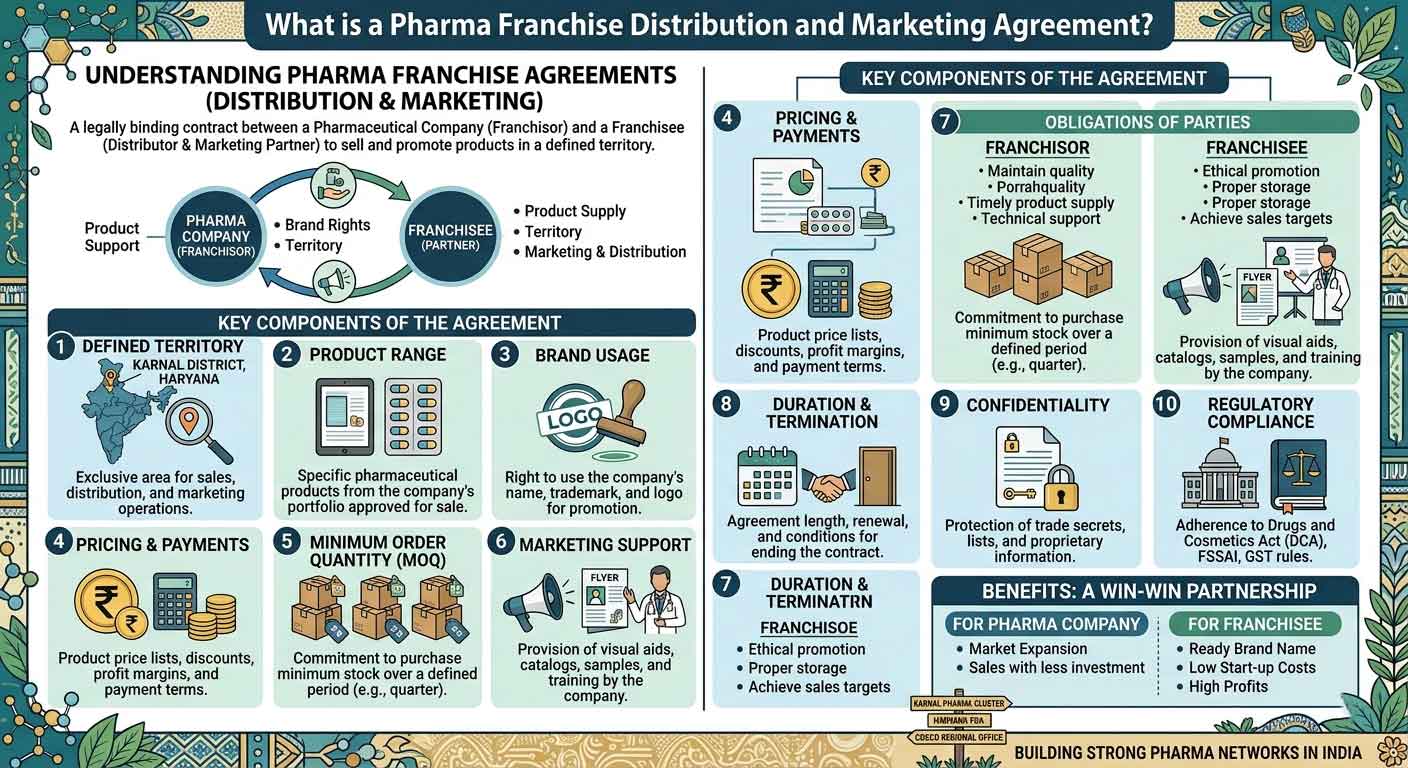
In the pharma franchise business model, a pharmaceutical company (franchisor) grants the rights to an individual or entity (franchisee) to market, sell, and distribute its products in a specific geographic area. The franchisee operates independently but under the established brand name and guidelines of the franchisor. This model is beneficial for both parties.
PCD stands for Professional Contracting Dealers or Private Contract Dealers, sometimes refer as ‘Propaganda Cum Distribution’ and the PCD pharma business model primarily focuses on the distribution aspect of pharmaceutical products. In this model, a pharmaceutical company appoints distributors (PCD distributors) to promote and distribute its products in a specific region.
Benefits and advantages of pharma franchise and PCD pharma
There are several benefits and advantages to pharma franchise and PCD pharma business models. These include:
Low investment: Pharma franchise and PCD pharma businesses require a relatively low upfront investment compared to other businesses in the pharmaceutical industry.
Low risk: Lower risk compared to starting an independent pharmaceutical business, as the franchisee operates under the umbrella of an established brand.
Brand recognition: Franchisees and PCD dealers benefit from the brand recognition of the franchisor or PCD company.
Product Portfolio: Access to a diverse range of pharmaceutical products provided by the franchisor, allowing for a comprehensive and varied product portfolio.
Marketing Support: Support from the pharmaceutical company in terms of promotional materials, marketing strategies, and sometimes financial assistance for local promotional activities.
Monopoly in Designated Area: Typically, the franchisor grants exclusive territorial rights to the franchisee, reducing competition from other franchisees of the same brand in the designated area.
Distribution Rights: Exclusive rights to distribute and promote the pharmaceutical company’s products in a specified region, allowing for focused market penetration.
Flexibility and Independence: PCD distributors have the flexibility to manage their operations independently, tailoring strategies to the specific needs of their market.
Product Range Selection: Ability to choose and focus on specific products from the pharmaceutical company’s portfolio, allowing for specialization in particular therapeutic areas.
Regulatory requirements and legal aspects of pharma franchise and PCD pharma
Understanding the regulatory requirements and legal aspects is crucial for individuals or entities involved in pharma franchise and PCD pharma business models. Compliance with applicable laws ensures the smooth and lawful operation of these businesses. Here’s an overview:
Compliance with GMP standards is essential for the manufacturing of pharmaceutical products. Franchisors must ensure that their manufacturing facilities meet these quality standards.
Marketing Authorization:
Pharmaceutical products distributed under the pharma franchise and PCD models must have marketing authorization from the regulatory agency. Franchisees and distributors should verify the registration status of products.
Quality Control and Assurance:
Both franchisors and PCD distributors need to implement robust quality control and assurance measures to ensure the safety, efficacy, and quality of pharmaceutical products.
Packaging and Labelling Compliance:
Adherence to packaging and labelling regulations is crucial. Products must be labelled with accurate information, including dosage, indications, contraindications, and proper storage instructions.
Adverse Event Reporting:
Establish procedures for reporting adverse events related to pharmaceutical products. Both franchisors and PCD distributors should promptly report any adverse reactions to regulatory authorities.
Record Keeping and Documentation:
Maintain comprehensive records and documentation related to manufacturing, distribution, and sales activities. This is essential for audits and regulatory inspections.
Code of Conduct for Marketing Practices:
Adhere to ethical marketing practices. Both franchisors and PCD distributors should comply with codes of conduct related to promotional activities, advertising, and interactions with healthcare professionals.
Legal Aspects:
Franchise Agreements:
Clearly outline the terms and conditions in the franchise agreement, specifying the rights and obligations of both parties. This includes details about the territory, duration, and termination clauses.
Intellectual Property Rights:
Franchise agreements should address issues related to intellectual property, including trademarks, copyrights, and patents. It should define the rights granted to the franchisee and the protection of the franchisor’s intellectual property.
Competition Law:
Ensure compliance with competition laws to prevent anti-competitive practices. Franchisors should structure agreements in a way that does not violate antitrust regulations.
Distribution Agreements:
For PCD distributors, a clear distribution agreement should be in place, outlining the rights and responsibilities of both parties. This includes exclusivity, territory, pricing, and payment terms.
Consumer Protection Laws:
Both franchisors and PCD distributors should comply with consumer protection laws to ensure transparency in product information, fair pricing, and the right of consumers to make informed choices.
Dispute Resolution Mechanisms:
Include mechanisms for dispute resolution in franchise and distribution agreements. This may involve arbitration or mediation to resolve conflicts between the parties.
Data Protection and Privacy:
Ensure compliance with data protection and privacy laws, especially if personal data is collected during marketing or distribution activities.
Contractual Compliance:
Regularly review and update agreements to ensure ongoing compliance with evolving regulatory requirements and legal standards.
Ensuring adherence to both regulatory requirements and legal aspects is essential for the success and sustainability of pharma franchise and PCD pharma businesses. Seeking legal counsel and staying informed about changes in regulations are key components of maintaining compliance in this highly regulated industry.
Identifying and selecting the right pharma franchise or PCD pharma company
Setting up a pharma franchise and PCD business
Business planning and strategy development
Financial management and investment strategies for pharma franchise or PCD pharma
Identifying and selecting the right pharma franchise or PCD pharma company
Selecting the right pharma franchise or PCD pharma company is a critical decision that can significantly impact the success of your business. Here are key steps to help you identify and choose the right pharma franchise or PCD pharma company:
Conduct Thorough Research:
Begin by understanding the pharmaceutical industry’s dynamics, including key players, market trends, and regulatory requirements. Research various pharma franchise and PCD pharma companies, their product portfolios, market reputation, and track record.
Define Your Goals and Objectives:
Clearly define your business goals and objectives, including the target market, revenue targets, and desired product range. This will help you narrow down your search to companies that align with your aspirations.
Company Reputation and Track Record:
Evaluate the reputation and track record of potential pharma franchise or PCD pharma companies. Look for companies with a history of reliability, quality products, and ethical business practices.
Product Portfolio:
Assess the product portfolio of the company. Ensure that they offer a diverse range of high-quality pharmaceutical products that align with your target market’s needs.
Regulatory Compliance:
Verify that the company complies with all necessary regulatory requirements and has the required licenses for manufacturing, distribution, and sale of pharmaceutical products.
Quality Standards (GMP Compliance):
Confirm that the company adheres to Good Manufacturing Practices (GMP) to ensure the quality and safety of their products. GMP compliance is crucial for pharmaceutical manufacturing.
Financial Stability and Investment Requirements:
Evaluate the company’s financial stability, including its profitability, cash flow, and debt profile. Understand the initial investment requirements, franchise fees, and royalty structures.
Financial Considerations:
Evaluate the financial aspects of the partnership, including the initial investment, profit margins, and payment terms. Ensure that the financial arrangement is fair and transparent.
Terms and Conditions:
Review the terms and conditions of the franchise or distribution agreement carefully. Pay attention to aspects such as territorial rights, exclusivity, duration of the agreement, and termination clauses.
Support and Training Programs:
Inquire about the support and training programs offered by the company. A reputable pharma franchise or PCD pharma company should provide training on product knowledge, sales strategies, and marketing support.
Customer Feedback and Reviews:
Seek feedback from existing franchisees or distributors. Customer reviews and testimonials can provide valuable insights into the company’s business practices, reliability, and customer satisfaction.
Legal Support:
You may seek legal advice before entering into any agreements. Ensure that the terms and conditions are legally sound and protect your interests.
Future Growth and Innovation:
Consider the company’s commitment to innovation and future growth. A forward-thinking company is more likely to adapt to industry changes and provide ongoing opportunities.
Personal Fit and Alignment:
Assess the cultural fit and alignment of values between you and the pharma franchise or PCD pharma company. A good fit can contribute to a more successful and mutually beneficial partnership.
Visit Manufacturing Facilities (if possible):
If feasible, visit the manufacturing facilities of the pharma company to assess the production processes, quality control measures, and overall infrastructure.
By carefully considering these factors, you can make an informed decision when selecting a pharma franchise or PCD pharma company. Remember to conduct due diligence, seek professional advice, and choose a company that aligns with your business goals and values.
Setting up a pharma franchise and PCD business
Launching a pharma franchise or PCD business involves a series of steps to establish a successful venture in the pharmaceutical industry. Here’s a comprehensive guide to help you navigate the process effectively:
Choose a Niche and Target Market:
Identify a niche within the pharmaceutical industry that aligns with your interests, expertise, and market demand. Define your target market, considering factors such as demographics, healthcare needs, and geographic location. Research existing competitors, their product offerings, and market strategies.
Select a Reputable Pharma Company:
Conduct thorough research to identify a reputable pharma company that offers a high-quality product portfolio, comprehensive support, and a fair franchise agreement. Consider their reputation, market presence, and regulatory compliance.
Determine your financial requirements, including initial franchise fees, investment in inventory, marketing expenses, and operational costs. Explore financing options, such as personal savings, bank loans, or investor funding.
Establish a Legal Entity:
Register your business as a legal entity, such as a sole proprietorship, partnership, or private limited company. This provides legal protection and facilitates tax compliance.
Set Up Office and Infrastructure:
Establish a physical office space with adequate facilities for storage, administration, and sales operations. Ensure proper infrastructure, including communication systems, inventory management tools, and transportation arrangements.
Recruit and train a Team:
Hire a competent team, including sales representatives, marketing personnel, and administrative staff. Provide comprehensive training on product knowledge, sales techniques, regulatory compliance, and ethical practices.
Develop Marketing and Sales Strategies:
Create a comprehensive marketing plan that encompasses branding, advertising, promotional activities, and digital marketing strategies. Develop effective sales techniques to reach your target market and build relationships with healthcare professionals.
Establish Distribution Channels:
Establish a reliable distribution network to ensure timely and efficient delivery of products to pharmacies, hospitals, and healthcare centres. Negotiate favourable terms with distributors and ensure proper storage and handling practices.
Maintain Regulatory Compliance:
Continuously monitor and adhere to all applicable drug regulations, licensing requirements, and ethical standards. Implement quality control measures and maintain proper documentation of product specifications, batch records, and sales transactions.
Build Relationships with Healthcare Professionals:
Establish strong relationships with healthcare professionals, such as doctors, pharmacists, and hospital administrators, to promote your products and gain their trust. Provide educational resources and training sessions to enhance their understanding of your offerings.
Monitor Performance and Adapt:
Regularly monitor your business performance, including sales figures, customer feedback, and market trends. Adapt your strategies and product offerings based on market dynamics and customer preferences to stay ahead of the competition.
Remember, launching a successful pharma franchise or PCD business requires a combination of strategic planning, regulatory compliance, effective marketing, and strong relationships with healthcare professionals. By following these steps and continuously adapting to market trends, you can establish a thriving business in the pharmaceutical industry.
Developing a comprehensive business plan and strategy is essential for the success of any pharma franchise or PCD (Professional Contracting Dealer) venture. Here’s a detailed guide to help you craft an effective plan:
Define Your Business Objectives:
Clearly articulate your business goals, including revenue targets, market share aspirations, and brand positioning.
Identify your target market, considering factors like demographics, healthcare needs, and geographic reach.
Define your unique selling proposition (USP) that differentiates you from competitors.
Conduct Market Research and Analysis:
Gather information about the pharmaceutical industry, including market trends, competitor analysis, and regulatory landscape.
Assess the demand for your product range within your target market.
Identify potential barriers to entry and formulate strategies to overcome them.
Develop a Product Portfolio:
Select a product portfolio that aligns with your target market’s needs and therapeutic areas.
Ensure the products are of high quality, meet regulatory standards, and have strong market potential.
Consider acquiring exclusive rights for specific products in your target area.
Establish Marketing and Sales Strategies:
Create a comprehensive marketing plan that encompasses branding, advertising, promotional activities, and digital marketing campaigns.
Develop effective sales techniques to reach your target market and build relationships with healthcare professionals.
Utilize social media platforms to engage with potential customers and showcase your expertise.
Set Up a Strong Distribution Network:
Establish reliable distribution channels to ensure timely and efficient delivery of products.
Negotiate favourable terms with distributors and ensure proper storage and handling practices.
Implement track and trace systems to monitor product movement and prevent counterfeiting.
Manage Finances and Investments:
Prepare a detailed financial forecast, including revenue projections, cost estimates, and investment requirements.
Secure funding through personal savings, bank loans, or investor partnerships.
Implement sound financial management practices, including budgeting, cash flow management, and inventory control.
Develop a Regulatory Compliance Plan:
Thoroughly understand the regulatory framework governing pharma franchise and PCD businesses.
Obtain all necessary licenses and permits from relevant authorities.
Implement quality control measures and maintain proper documentation of product specifications, batch records, and sales transactions.
Build Relationships with Healthcare Professionals:
Establish strong relationships with doctors, pharmacists, and hospital administrators.
Provide educational resources and training sessions to enhance their understanding of your product offerings.
Participate in industry events and conferences to network with potential partners and customers.
Continuously Monitor and Adapt:
Regularly review your business performance, including sales figures, customer feedback, and market trends.
Adapt your strategies and product offerings based on market dynamics and customer preferences.
Embrace innovation and technological advancements to enhance efficiency and customer experience.
Financial management and investment strategies for pharma franchise or PCD pharma
Effective financial management and investment strategies are essential for the long-term sustainability and growth of any pharma franchise or PCD business. Here’s a comprehensive guide to help you manage your finances wisely and make sound investment decisions:
Financial Management:
Develop a Comprehensive Financial Plan:
Create a detailed financial forecast that projects revenue, expenses, and cash flow for the next three to five years.
Identify your initial investment requirements, including franchise fees, inventory costs, marketing expenses, and operational overhead.
Set realistic financial goals and targets to track your progress and measure your success.
Budgeting:
Develop a detailed budget that covers all aspects of your business, including startup costs, operational expenses, marketing, and contingencies.
Regularly monitor your budget and adjust it as needed to align with actual financial performance.
Cash Flow Management:
Maintain a close eye on cash flow by managing receivables and payables effectively.
Implement credit policies to ensure timely payments from customers and manage vendor payment terms.
Cost Control:
Implement cost control measures to optimize operational expenses without compromising quality.
Negotiate with suppliers for favourable terms and bulk purchase discounts.
Manage Inventory Effectively:
Implement inventory management practices that prevent overstocking and stockouts.
Utilize inventory tracking software to monitor stock levels and optimize ordering processes.
Regularly review inventory turnover rates to ensure efficient product movement.
Establish a Robust Pricing Strategy:
Analyse competitor pricing strategies and market demand to determine competitive pricing for your products.
Consider offering discounts for bulk purchases or early payment incentives.
Regularly review and adjust pricing based on market dynamics and cost fluctuations.
Explore Financing Options:
Secure funding through personal savings, bank loans, or investor partnerships.
Consider government-sponsored financing schemes or grants for small businesses.
Explore crowdfunding platforms to raise capital from a wider pool of investors.
Emergency Fund:
Establish an emergency fund to cover unforeseen expenses or disruptions in business operations.
Aim to maintain a financial cushion that can sustain the business during challenging times.
Seek Financial Guidance:
Consult with experienced financial advisors or accountants to optimize your financial management practices.
Seek advice on tax planning and compliance to minimize your tax liabilities.
Utilize financial management software or tools to automate tasks and improve efficiency.
Investment Strategies:
Diversification:
Diversify your product portfolio to minimize risk. Consider offering a mix of high-demand products across different therapeutic areas.
Geographical Expansion:
Explore opportunities for geographical expansion by identifying new markets with unmet pharmaceutical needs.
Conduct thorough market research before entering new territories.
Invest in Growth Opportunities:
Allocate funds for marketing and promotional activities to expand your reach and acquire new customers.
Invest in research and development to introduce new products or improve existing ones.
Expand your distribution network to reach new markets and increase sales potential.
Training and Skill Development:
Invest in training programs for your team to enhance their product knowledge, sales skills, and customer relationship management.
Well-trained staff can contribute to increased sales and customer satisfaction.
Technology and Infrastructure Upgrades:
Invest in technology upgrades to improve operational efficiency and customer service.
Upgrade infrastructure to meet growing demands and enhance the overall distribution process.
Networking and Partnerships:
Invest time and resources in building strong relationships with pharmaceutical companies, healthcare professionals, and other stakeholders.
Explore strategic partnerships that can enhance your business’s capabilities and market reach.
Market Research and Analysis:
Allocate resources for ongoing market research to stay informed about industry trends, customer preferences, and emerging opportunities.
Use market insights to make informed investment decisions.
Customer Relationship Management (CRM) Systems:
Invest in CRM systems to manage customer interactions, track sales, and enhance communication.
A well-implemented CRM system can contribute to customer retention and satisfaction.
Employee Incentives:
Consider offering incentives to motivate and reward your sales team for achieving targets.
Incentives can include bonuses, commissions, or recognition programs.
By adopting effective financial management and investment strategies, you can strengthen the financial health of your pharma franchise or PCD pharma business, positioning it for long-term success in a competitive market. Regularly review and adjust your strategies to align with the evolving needs of the industry and your business.
Module 3: Product Selection and Portfolio Management
Selecting the right pharmaceutical products
Building a diverse product portfolio
Managing product life cycles and introductions
Selecting the right pharmaceutical products
Selecting the right pharmaceutical products is crucial for the success of a pharma franchise or PCD business. The right product mix can attract customers, boost sales, and establish a strong reputation in the market. Here’s a comprehensive guide to help you make informed product selection decisions:
Understand Market Demand:
Conduct thorough market research to understand the demand for pharmaceutical products in your target market.
Identify prevalent health conditions, treatment gaps, and the demand for specific therapeutic categories.
Assess Competitor Offerings:
Analyse the product portfolios of competitors in your region.
Identify gaps in their offerings and areas where you can differentiate your product selection.
Evaluate Product Quality and Safety:
Prioritize pharmaceutical products from manufacturers with a strong reputation for quality and safety.
Assess whether products comply with Good Manufacturing Practices (GMP) and other quality standards.
Consider Product Portfolio Compatibility:
Choose products that complement each other and align with your target market’s needs.
Avoid product overlap or over-specialization in a narrow therapeutic area.
Diversify Your Portfolio:
Aim for a diversified product portfolio that covers various therapeutic areas.
Consider including products for acute and chronic conditions to address a wide range of healthcare needs.
Address Unmet Medical Needs:
Look for pharmaceutical products that address unmet medical needs in your target market.
Identify areas where there is a shortage of specific medications or treatment options.
Evaluate Profitability and Margins:
Analyse the profit margins and sales potential of different product lines.
Prioritize products with attractive margins and strong demand to maximize profitability.
Product Pricing Strategy:
Develop a pricing strategy that aligns with market dynamics and the purchasing power of your target customers.
Consider the pricing strategies of competitors while ensuring a balance between affordability and profitability.
Evaluate Supply Chain Logistics:
Assess the logistics and distribution requirements for each product in your portfolio.
Ensure that you can efficiently handle the storage, transportation, and delivery of products.
Consider Product Life Cycle:
Evaluate the product life cycle of pharmaceuticals, considering factors such as patent expiry and potential generic competition.
Balance your portfolio with both established products and newer, innovative medications.
Monitor and Adjust:
Regularly monitor the performance of each product in your portfolio.
Be willing to adjust your product selection based on market feedback, changes in demand, and emerging trends.
Embrace Innovation and Product Development:
Stay updated on the latest advancements in pharmaceutical research and development.
Consider introducing new and innovative products to differentiate yourself from competitors.
By following these guidelines and carefully evaluating each product’s potential, you can make informed decisions that will strengthen your product portfolio, enhance your market presence, and drive the success of your pharma franchise or PCD business.
Building a diverse product portfolio
Building a diverse product portfolio is essential for the success of your pharma franchise or PCD business. A diversified portfolio enables you to cater to a broader range of healthcare needs, reach different customer segments, and navigate market fluctuations. Here’s a step-by-step guide to help you build a diverse product portfolio:
Conduct Comprehensive Market Research:
Identify Market Trends: Stay informed about current and emerging trends in the pharmaceutical industry. Understand the prevalence of specific health conditions and the demand for related medications.
Analyse Competitor Portfolios: Assess the product portfolios of competitors in your target market. Identify gaps or areas where you can offer differentiated products.
Categorize Therapeutic Areas:
Divide therapeutic areas based on medical specialties or health conditions.
Prioritize areas with high demand or unmet medical needs.
Collaborate with Multiple Manufacturers:
Partner with multiple pharmaceutical manufacturers to diversify your sources.
Each manufacturer may specialize in different therapeutic areas or offer unique formulations.
Include Products for Acute and Chronic Conditions:
Ensure your portfolio includes medications for both acute and chronic health conditions.
Acute medications address immediate health issues, while chronic medications provide ongoing treatment.
Explore Biopharmaceuticals and Specialty Medications:
Assess the demand for biopharmaceuticals and specialty medications.
These products often target specific diseases or conditions and may have higher profit margins.
Include Various Dosage Forms:
Offer medications in various dosage forms, including tablets, capsules, injections, creams, and liquids.
Catering to different preferences and patient needs enhances your product diversity.
Balance New and Established Products:
Include both new and established pharmaceutical products in your portfolio.
New products may address emerging healthcare trends, while established products offer reliability and market acceptance.
Regularly Update and Refresh the Portfolio:
Regularly review and update your product portfolio based on market feedback and changing healthcare dynamics.
Introduce new products or remove slow-moving ones to keep the portfolio dynamic.
Align with Healthcare Professionals:
Collaborate with healthcare professionals to understand their prescription preferences.
Align your product portfolio to meet the needs and preferences of prescribers.
Stay Informed About Regulatory Compliance:
Ensure all products in your portfolio comply with local and international regulatory standards.
Stay updated on any changes in regulations that may impact your product selection.
Customer Feedback and Market Response:
Gather feedback from customers and healthcare professionals on your product offerings.
Monitor market response to understand which products are performing well and which may need adjustments.
By strategically building a diverse product portfolio, you position your pharma franchise or PCD business to meet the varied healthcare needs of your target market. Regularly evaluate and adapt your portfolio to stay responsive to market demands and trends.
Managing product life cycles and introductions
Managing product life cycles and introductions in the pharma franchise and PCD business is crucial for sustained growth and competitiveness. Here’s a guide on how to effectively handle product life cycles and introductions in this industry:
Understand the Product Life Cycle:
Introduction: The product is launched into the market.
Growth: Sales and market share increase as the product gains acceptance.
Maturity: Sales stabilize, and competition may increase.
Decline: Sales decrease due to factors like market saturation or the introduction of newer alternatives.
Analyse Product Performance and Market Trends:
Regularly monitor the performance of each product, including sales figures, market share, and customer feedback. Analyse market trends and identify opportunities for product revitalization or extension.
Develop Product Life Cycle Strategies:
Implement strategies tailored to each stage of the product life cycle. For instance, in the introduction stage, focus on generating awareness and building a customer base. In the growth stage, expand distribution channels and promotional activities.
Manage Product Introductions Effectively:
Plan and execute product introductions strategically. Develop a comprehensive marketing plan, establish strong relationships with healthcare professionals, and ensure adequate product availability.
Monitor Regulatory Compliance:
Stay updated on any regulatory changes that may affect the sale or distribution of specific products. Be prepared for product withdrawal and to manage the impact if any product faces regulatory challenges.
Diversify Product Introductions:
Explore opportunities to introduce products in new therapeutic areas. Introduce products in various dosage forms to cater to different patient preferences.
Collaboration with Manufacturers:
Collaborate closely with pharmaceutical manufacturers to receive early information about upcoming product launches. Consider exclusive arrangements to be the sole distributor of new products in your territory.
Marketing and Promotion Strategies:
Develop targeted marketing strategies for product introductions. Implement educational initiatives to inform healthcare professionals about the benefits of new products.
Managing Mature Products:
Implement strategies to revitalize mature products, such as rebranding, packaging changes, or marketing campaigns. Consider competitive pricing strategies to maintain market share during the maturity phase.
Plan for Product Phase-Out:
Develop a phase-out plan for products approaching the decline stage. This may involve reducing production, transitioning to alternative products, or exploring licensing opportunities.
Adapt Strategies Based on Market Dynamics:
Be prepared to adapt your product life cycle management strategies based on market dynamics, customer feedback, and competitive landscape. Remain agile and responsive to changing market conditions.
Forecasting and Inventory Management:
Implement accurate forecasting methods for both new introductions and existing products. Optimize inventory management to prevent overstocking or shortages.
Effectively managing product life cycles and introductions requires a proactive and strategic approach. By staying informed, adapting to market changes, and implementing targeted strategies, you can maximize the success of both established products and new introductions in your pharma franchise or PCD business.
Module 4: Marketing and Sales Strategies
Developing a marketing plan
Promotional strategies and branding
Sales techniques and relationship building with healthcare professionals
Developing a marketing plan
Developing a marketing plan for a pharma franchise and PCD business involves a systematic approach to promote pharmaceutical products and establish a strong market presence. Here’s a step-by-step guide to help you create an effective marketing plan:
Executive Summary:
Provide a brief overview of your pharma franchise or PCD business, including your mission, objectives, and a snapshot of your target market.
Situation Analysis:
SWOT Analysis: Conduct a comprehensive analysis of your business’s strengths, weaknesses, opportunities, and threats.
Market Analysis: Evaluate the pharmaceutical industry, including market trends, competitor landscape, and regulatory considerations.
Define Target Market:
Clearly define your target market, including healthcare professionals, pharmacies, and end consumers.
Identify specific demographics, geographic locations, and healthcare needs.
Set Marketing Objectives:
Establish clear, measurable, and time-bound marketing objectives aligned with your overall business goals.
Objectives may include increasing market share, launching new products, or expanding into new territories.
Develop a Unique Selling Proposition (USP):
Clearly articulate what makes your pharma franchise or PCD business unique in the market.
Highlight the specific value proposition that sets your business apart from competitors.
Product Portfolio Strategy:
Outline your product portfolio strategy, emphasizing key products, therapeutic areas, and any new product introductions.
Consider the life cycle of each product and plan marketing strategies accordingly.
Pricing Strategies:
Develop pricing strategies based on market conditions, competitor pricing, and perceived value.
Consider different pricing models for various product categories.
Distribution Channels:
Define your distribution channels, including the network of pharmacies, healthcare facilities, and geographic coverage.
Ensure efficient and reliable distribution to reach your target market.
Promotional Mix:
Advertising: Plan advertising campaigns through various channels, including online, print, radio, and television.
Public Relations: Develop PR strategies to enhance brand visibility and credibility.
Sales Promotion: Implement sales promotion activities such as discounts, incentives, and loyalty programs.
Digital Marketing Strategies:
Online Presence: Build and optimize a professional website.
Social Media Marketing: Develop a strong presence on social media platforms to engage with healthcare professionals and consumers.
Content Marketing: Create informative content related to pharmaceuticals, healthcare trends, and wellness.
Regulatory Compliance:
Ensure all marketing activities comply with pharmaceutical regulations and ethical standards.
Stay informed about changes in advertising and promotional guidelines.
Relationship Marketing:
Foster relationships with healthcare professionals through educational initiatives, training programs, and ongoing support.
Implement customer relationship management (CRM) systems to manage customer interactions effectively.
Budget Allocation:
Allocate budgets to different marketing initiatives based on their potential impact and relevance.
Ensure a balance between online and offline marketing efforts.
Monitoring and Analytics:
Set up monitoring mechanisms to track the performance of marketing campaigns.
Use analytics tools to measure key performance indicators (KPIs) and assess the return on investment (ROI).
Training and Support:
Provide training and support to your sales team to enhance their product knowledge, selling skills, and customer engagement.
Ensure that the sales team is well-equipped to represent your products effectively.
Evaluation and Adjustment:
Regularly evaluate the effectiveness of your marketing strategies.
Be willing to make adjustments based on market feedback, changing industry trends, or shifts in customer behaviour.
Timeline and Milestones:
Develop a timeline for the implementation of your marketing plan.
Set milestones to track progress and achievements.
By following these steps, you can develop a comprehensive marketing plan that aligns with the specific needs and goals of your pharma franchise or PCD business. Regularly review and update your plan to adapt to market dynamics and achieve long-term success.
Promotional strategies and branding
Promotional strategies and branding are crucial for creating awareness, building trust, and driving sales in the pharma franchise and PCD business. Here are effective promotional strategies to consider:
Product Knowledge and Training:
Internal Training Programs: Conduct regular training sessions for your sales team to ensure in-depth product knowledge. Equip them with the skills to effectively communicate the features and benefits of pharmaceutical products.
Targeted Digital Marketing:
Online Presence: Develop a professional website that provides information about your products and services. Optimize the website for search engines to enhance online visibility.
Social Media Marketing: Utilize social media platforms to engage with healthcare professionals and consumers. Share educational content, product updates, and industry news.
Email Marketing: Implement targeted email campaigns to reach healthcare professionals and pharmacies. Share relevant information, promotions, and product updates.
Trade Shows and Exhibitions:
Participation in Industry Events: Exhibit at pharmaceutical trade shows and exhibitions to showcase your products. Network with industry professionals and generate leads.
Educational Initiatives:
Webinars and Workshops: Host webinars or workshops to educate healthcare professionals about your products. Cover topics related to industry trends, advancements, and best practices.
In-Person Detailing:
Sales Representative Visits: Schedule visits from sales representatives to healthcare professionals. Provide detailed information about your pharmaceutical products and address any queries.
Patient Support Programs:
Patient Education Programs: Develop programs to educate patients about the proper use and benefits of pharmaceutical products. Offer resources and support to enhance patient satisfaction.
Relationship Marketing:
Healthcare Professional Relationships: Build strong relationships with healthcare professionals through ongoing communication. Provide resources, samples, and product information.
Promotional Materials:
Printed Collateral: Create professional and informative brochures, pamphlets, and product catalogues. Distribute these materials to healthcare professionals and pharmacies.
Samples and Promotional Items: Provide product samples to healthcare professionals for trial. Offer promotional items with your branding to enhance visibility.
Sponsorships and Partnerships:
Event Sponsorship: Sponsor relevant healthcare events, conferences, or seminars. Position your brand as a supporter of industry advancements.
Collaborations with Healthcare Organizations: Partner with healthcare organizations for joint initiatives. Collaborate on research, educational programs, or community health projects.
Loyalty Programs:
Pharmacy and Healthcare Professional Incentives: Implement loyalty programs or incentives for pharmacies and healthcare professionals. Reward consistent business and partnerships.
Regulatory Compliance:
Adherence to Regulations: Ensure that all promotional activities comply with pharmaceutical regulations and ethical standards. Stay informed about changes in advertising and promotional guidelines.
Testimonials and Case Studies:
Customer Testimonials: Collect and showcase testimonials from satisfied healthcare professionals and patients. Highlight success stories and positive experiences with your products.
Continuous Monitoring and Feedback:
Customer Feedback Mechanisms: Implement mechanisms to gather feedback from healthcare professionals and consumers. Use feedback to improve products and tailor promotional strategies.
Quality Assurance and Compliance:
Emphasize Quality and Compliance: Highlight your commitment to quality assurance and compliance with industry standards. Build trust by showcasing adherence to regulations and ethical business practices.
Online Advertising:
Paid Advertising: Utilize paid online advertising on search engines and social media platforms. Target specific demographics and geographical areas relevant to your business.
Community Engagement:
Community Health Initiatives: Participate in or organize community health programs. Engage with local communities to promote health and wellness.
Promotional strategies in the pharma franchise and PCD business should be diverse, targeted, and aligned with the needs of healthcare professionals and consumers. Regularly assess the effectiveness of your strategies and adapt them to changing market dynamics.
Sales techniques and relationship building with healthcare professionals
Building strong relationships with healthcare professionals (HCPs) is crucial for the success of any pharma franchise or PCD business. HCPs play a vital role in prescribing medications and influencing patient decisions. Here are effective sales techniques and relationship-building strategies to cultivate long-lasting partnerships with HCPs:
Develop a Deep Understanding of Products and Therapeutic Areas:
Possess in-depth knowledge of your product portfolio, their mechanisms of action, clinical trial data, and comparative advantages. Stay updated on the latest research and advancements in your therapeutic areas.
Conduct Thorough Market Research and Competitor Analysis:
Analyse the market landscape, identify unmet needs, and understand the prescribing patterns of HCPs in your target region. Evaluate your competitors’ product offerings, positioning, and sales strategies.
Target the Right HCPs:
Prioritize interactions with HCPs who are most likely to prescribe your products based on their patient demographics, specialty, and prescribing habits. Focus on building relationships with key opinion leaders and influencers in your field.
Personalize Your Approach:
Tailor your sales pitch and communication style to each HCP’s individual preferences, practice, and patient needs. Demonstrate genuine interest in their challenges and aspirations.
Provide Educational Resources and Support:
Offer HCPs access to comprehensive product information, clinical studies, and educational materials. Organize training sessions, webinars, and case study presentations to enhance their knowledge and understanding of your products.
Address Pain Points and Unmet Needs:
Identify the challenges and unmet needs that HCPs face in their practice. Position your products as solutions that can address these pain points and improve patient outcomes.
Build Trust and Credibility:
Establish trust with HCPs by demonstrating integrity, transparency, and ethical conduct. Share evidence-based information, avoid exaggerated claims, and respect their expertise.
Maintain Regular Communication:
Stay in touch with HCPs through regular visits, emails, and phone calls. Provide updates on product developments, clinical trials, and industry news.
Respond Promptly to Inquiries and Concerns:
Address HCPs’ inquiries and concerns promptly and professionally. Demonstrate responsiveness and a willingness to collaborate.
Offer Ongoing Support and Feedback:
Provide ongoing support to HCPs, including assistance with patient education, case studies, and troubleshooting. Gather feedback to refine your products and services.
Engage in Industry Events and Conferences:
Participate in industry events, conferences, and workshops to network with HCPs, showcase your products, and strengthen relationships.
Support Continuing Medical Education (CME):
Sponsor or co-sponsor CME programs to enhance HCPs’ knowledge and skills. This demonstrates your commitment to their professional development.
Recognize and Reward Loyalty:
Acknowledge and reward HCPs for their continued support and positive prescribing patterns. Consider loyalty programs, incentives, and recognition events.
Seek Feedback and Continuously Improve:
Regularly seek feedback from HCPs about your products, services, and sales interactions. Use their insights to improve your sales techniques and relationship-building strategies.
Adhere to Ethical Guidelines and Regulatory Standards:
Ensure that all sales interactions and promotional activities comply with industry regulations, ethical codes, and transparency guidelines.
By implementing these sales techniques and relationship-building strategies, you can cultivate strong, long-lasting partnerships with HCPs, enhance your brand reputation, and drive the success of your pharma franchise or PCD business.
Module 5: Distribution and Supply Chain Management
Understanding the pharmaceutical supply chain
Effective distribution strategies
Inventory management and logistics
Understanding the pharmaceutical supply chain
Understanding the pharmaceutical supply chain is essential for anyone involved in the pharmaceutical industry, including those in the pharma franchise and PCD business. The pharmaceutical supply chain is a complex network involving the production, distribution, and delivery of pharmaceutical products. Here’s an overview of the key components and processes in the pharmaceutical supply chain:
Research and Development (R&D):
Drug Discovery: The supply chain begins with the research and development phase, where pharmaceutical companies explore and discover new drugs and treatments.
Clinical Trials: Drugs undergo rigorous testing in clinical trials to assess safety and efficacy.
Manufacturing:
Active Pharmaceutical Ingredient (API) Production: The manufacturing process involves producing the active pharmaceutical ingredients that form the basis of medications.
Formulation and Drug Manufacturing: API is combined with other ingredients to create the final drug product.
Quality Control: Strict quality control measures are implemented to ensure the safety and efficacy of the pharmaceutical products.
Primary Packaging: The finished pharmaceutical product is packaged in primary packaging, which is the immediate container (bottles, blister packs, etc.).
Secondary Packaging: Primary packages are then grouped and labelled in secondary packaging for bulk shipment.
Distribution and Logistics:
Warehousing: Pharmaceutical products are stored in warehouses before distribution.
Order Fulfilment: Orders are processed, and products are picked and packed for shipment.
Transportation: Products are transported from manufacturing facilities to distribution centres and then to wholesalers, distributors, or directly to pharmacies.
Wholesale Distribution:
Wholesalers and Distributors: Wholesalers and distributors play a key role in the pharmaceutical supply chain by purchasing large quantities of medications from manufacturers and distributing them to pharmacies, hospitals, and other healthcare providers.
Dispensing: Pharmacists dispense medications based on prescriptions provided by healthcare professionals.
Healthcare Providers:
Hospitals and Clinics: Larger healthcare institutions purchase pharmaceuticals for use in patient care.
Healthcare Professionals: Individual healthcare professionals prescribe and administer medications to patients.
Patient Access:
End-User Access: Patients access pharmaceutical products through pharmacies, healthcare providers, and hospitals.
Regulatory Compliance: Throughout the supply chain, adherence to regulatory standards and compliance with quality assurance protocols is crucial.
Regulatory Oversight:
Regulatory Authorities: Government regulatory bodies, such as the Drugs Controller General of India or U.S. Food and Drug Administration (FDA) or the European Medicines Agency (EMA), oversee the safety, efficacy, and quality of pharmaceutical products.
Compliance Audits: Manufacturers, distributors, and other stakeholders undergo regular compliance audits to ensure adherence to regulatory requirements.
Returns and Recalls:
Product Recalls: In the event of quality issues or safety concerns, pharmaceutical products may be recalled from the market.
Returns Handling: Processes are in place for handling product returns to ensure proper disposal or reevaluation.
Technology Integration:
Serialization and Track-and-Trace: The pharmaceutical industry is increasingly adopting serialization and track-and-trace technologies to monitor the movement of products throughout the supply chain.
Supply Chain Visibility: Technology is used to enhance visibility and transparency in the supply chain, allowing stakeholders to trace products and ensure their authenticity.
Understanding and effectively managing the pharmaceutical supply chain is critical for ensuring the availability, safety, and quality of pharmaceutical products. It involves coordination among various stakeholders, adherence to regulatory standards, and the use of advanced technologies to enhance efficiency and transparency.
Effective distribution strategies
Effective distribution strategies are crucial for the success of any pharma franchise or PCD business. A robust distribution network ensures that your products reach the right customers at the right time, maximizing sales and market share. Here are some key strategies to implement for effective distribution in the pharma franchise and PCD business:
Identify and Select Distributors:
Carefully evaluate potential distributors based on their experience, reach, reputation, and ability to align with your business goals. Ensure they have strong relationships with healthcare professionals and pharmacies in your target market.
Establish Clear Distribution Agreements:
Clearly define the terms and conditions of your partnership with each distributor, including pricing, exclusivity arrangements, performance expectations, and reporting requirements.
Implement Effective Inventory Management:
Develop robust inventory management systems to ensure adequate stock availability and prevent stockouts. Utilize technology to track inventory levels, forecast demand, and optimize order fulfilment processes.
Monitor and Evaluate Distributor Performance:
Regularly monitor the performance of your distributors based on agreed-upon metrics, such as sales volume, market penetration, and customer feedback. Provide ongoing support and identify areas for improvement.
Expand Distribution Channels:
Consider expanding your distribution channels beyond traditional pharmacies and wholesalers. Explore partnerships with online retailers, e-commerce platforms, and direct-to-consumer (DTC) models to reach a wider audience.
Leverage Technology for Distribution Optimization:
Utilize technology tools to optimize your distribution processes, such as inventory management software, route optimization tools, and real-time tracking systems.
Comply with Regulatory Requirements:
Ensure that your distribution activities adhere to all applicable regulations, including licensing requirements, transportation guidelines, and product handling standards.
Maintain Open Communication:
Foster open and transparent communication with your distributors. Regularly share product updates, promotional plans, and market insights to enhance collaboration and success.
Adapt to Changing Market Dynamics:
Regularly review and adapt your distribution strategies based on evolving market trends, customer preferences, and competitive landscape. Remain agile and responsive to changing market conditions.
By implementing these effective distribution strategies, you can establish a strong and efficient distribution network that will expand your market reach, drive sales growth, and solidify your position in the pharma franchise and PCD business landscape.
Inventory management and logistics
Inventory management and logistics play a critical role in the success of any pharma franchise or PCD business. Efficient inventory management practices ensure adequate stock availability, prevent stockouts, and minimize carrying costs. Effective logistics ensure timely delivery of products to healthcare professionals and pharmacies, maintaining customer satisfaction and reputation.
Inventory Management Strategies for Pharma Franchise and PCD Business:
Demand Forecasting:
Accurately forecast product demand using historical sales data, market trends, and seasonal factors. Collaborate with healthcare professionals and customers to understand their needs and preferences.
Inventory Classification:
Classify inventory into categories based on demand frequency and criticality. Implement appropriate inventory control techniques for each category, such as ABC analysis or just-in-time (JIT) inventory.
Establish Safety Stock Levels:
Maintain adequate safety stock levels to account for unexpected spikes in demand or supply disruptions. Adjust safety stock levels based on lead times and demand variability.
Regular Inventory Audits:
Conduct regular inventory audits to verify physical stock levels against system records, identify discrepancies, and prevent stockouts.
Implement Inventory Management Software:
Utilize inventory management software to track stock levels, manage orders, and optimize inventory turnover.
Batch Tracking and Serialization:
Implement batch tracking and serialization to comply with regulatory requirements and trace pharma franchise products easily in case of recalls.
First-In, First-Out (FIFO) Principle:
Adopt the FIFO principle to ensure that older inventory is used first, preventing product expiration and obsolescence.
Minimize Carrying Costs:
Implement strategies to minimize carrying costs, such as negotiating favourable pricing with suppliers, reducing lead times, and optimizing inventory turnover.
Logistics Strategies for Pharma Franchise and PCD Business:
Establish a Robust Distribution Network:
Develop a strong distribution network with reliable partners who can effectively transport and store pharma products under controlled conditions.
Optimize Delivery Routes:
Optimize delivery routes to minimize transportation costs and ensure timely product delivery. Utilize route optimization software for efficient route planning.
Track Shipments in Real-Time:
Implement real-time tracking systems to monitor the movement of goods, identify potential delays, and proactively address any issues.
Maintain Temperature-Controlled Storage:
Ensure proper temperature-controlled storage facilities to maintain product integrity and prevent spoilage.
Comply with Transportation Regulations:
Adhere to all applicable transportation regulations for hazardous materials, ensuring safe and compliant product movement.
Partner with Logistics Experts:
Consider partnering with logistics experts who specialize in pharmaceutical product handling and transportation to ensure adherence to industry standards and regulatory requirements.
Implement Contingency Plans:
Develop contingency plans to address potential disruptions in the supply chain, such as natural disasters or transportation strikes.
Continuously Evaluate and Improve:
Regularly evaluate the effectiveness of your logistics strategies and identify areas for improvement. Embrace new technologies and processes to enhance efficiency and reduce costs.
By implementing these inventory management and logistics strategies, pharma franchise and PCD businesses can ensure a smooth and uninterrupted supply chain, maintain product quality, and deliver products to customers in a timely and efficient manner, contributing to overall business success and customer satisfaction.
Module 6: Advanced Topics in Pharma Franchise and PCD Pharma
Expanding into new markets and territories
Utilizing technology and innovation in pharma franchise or PCD pharma
Building a successful team and leadership skills for pharma franchise or PCD pharma
Emerging trends in the pharmaceutical industry
Adapting to changes in healthcare and pharmaceutical regulations
Expanding into new markets and territories
Expanding into new markets and territories is a strategic move for pharma franchise and PCD businesses to broaden their reach, increase market share, and diversify their revenue streams. However, venturing into new markets requires careful planning, market research, and adaptation to local regulations and cultural nuances. Here’s a comprehensive guide to effectively expanding into new markets in the pharma franchise and PCD business:
Conduct Thorough Market Research:
Before entering a new market, conduct thorough market research to understand the local healthcare landscape, competitive landscape, regulatory environment, and patient needs. Analyze the demographics, disease patterns, and prescribing habits of the target population.
Identify Potential Partners:
Seek out potential partners or distributors in the target market who have a strong understanding of the local market, regulatory requirements, and healthcare professional network. Evaluate their experience, reputation, and ability to align with your business goals.
Develop a Market-Specific Strategy:
Tailor your marketing and sales strategies to the specific needs and preferences of the target market. Consider local language preferences, cultural sensitivities, and healthcare practices.
Build Relationships with Healthcare Professionals:
Establish strong relationships with local healthcare professionals, including doctors, pharmacists, and hospital administrators. Engage them through educational events, webinars, and personalized interactions.
Promote Brand Awareness and Visibility:
Implement targeted marketing campaigns to raise brand awareness and visibility in the new market. Utilize local media channels, social media platforms, and healthcare professional networks.
Offer Competitive Pricing and Incentives:
Develop competitive pricing strategies that align with local market dynamics and consider affordability for patients. Offer attractive incentives and support programs to franchise partners or PCD distributors.
Monitor and Evaluate Performance:
Regularly monitor the performance of your expansion efforts in the new market. Track key metrics such as sales volume, market penetration, and customer feedback to identify areas for improvement.
Adapt and Refine Strategies:
Be prepared to adapt and refine your expansion strategies based on market feedback, regulatory changes, and emerging trends. Remain flexible and responsive to the evolving dynamics of the new market.
By following these guidelines and carefully tailoring your expansion strategy to the specific characteristics of the new market, pharma franchise and PCD businesses can successfully expand their footprint, reach new customer segments, and achieve sustainable growth in diverse markets.
Utilizing technology and innovation in pharma franchise or PCD pharma
Utilizing technology and innovation is crucial for success in the pharma franchise and PCD (Propaganda Cum Distribution) pharma business. Here are key ways to leverage technology and innovation in this industry:
Digital Marketing:
Online Presence: Establish a strong online presence through a professional website and social media platforms to reach a wider audience.
Email Marketing: Use targeted email campaigns to communicate with healthcare professionals, pharmacies, and potential clients.
Mobile Applications:
Ordering and Tracking Apps: Develop mobile applications that allow customers to place orders, track shipments, and access product information conveniently.
Healthcare Professional Apps: Create apps that provide healthcare professionals with resources, product information, and training materials.
E-Commerce Platforms:
Online Ordering Platforms: Implement e-commerce platforms to facilitate online ordering for pharmacies and healthcare providers.
Integration with ERP: Integrate e-commerce systems with Enterprise Resource Planning (ERP) solutions for seamless order processing and inventory management.
Track-and-Trace Systems:
Product Traceability: Implement track-and-trace systems to enhance visibility and traceability throughout the supply chain.
Regulatory Compliance: Use technology to comply with regulatory requirements related to product traceability and serialization.
Data Analytics:
Predictive Analytics: Utilize predictive analytics to forecast demand, optimize inventory levels, and improve supply chain efficiency.
Market Insights: Analyse data to gain insights into market trends, customer behaviour, and product performance.
Customer Relationship Management (CRM):
CRM Systems: Implement CRM systems to manage and strengthen relationships with healthcare professionals, pharmacies, and other clients.
Personalized Communication: Use CRM data to personalize communication and tailor marketing strategies to specific customer needs.
Telemedicine and Remote Support:
Telemedicine Platforms: Explore opportunities to collaborate with telemedicine platforms to connect with healthcare professionals and provide remote support.
Virtual Training: Conduct virtual training sessions and webinars for healthcare professionals to enhance product knowledge.
Cloud Computing:
Data Storage and Accessibility: Utilize cloud computing for secure data storage and easy accessibility to information from various locations.
Collaboration: Enhance collaboration among teams by using cloud-based tools for communication and document sharing.
Internet of Things (IoT):
Cold Chain Monitoring: Implement IoT devices for real-time monitoring of temperature-sensitive products during transportation and storage.
Smart Inventory Management: Use IoT sensors to track inventory levels and automatically trigger reorders when stock is low.
Virtual Reality (VR) and Augmented Reality (AR):
Product Demonstrations: Use VR and AR for virtual product demonstrations, allowing healthcare professionals to experience products in a virtual environment.
Training Simulations: Develop training simulations for sales representatives and healthcare professionals to enhance product knowledge.
Regulatory Technology (RegTech):
Compliance Management: Adopt RegTech solutions to streamline compliance management and ensure adherence to regulatory requirements.
Audit Trails: Implement technology solutions that provide robust audit trails for regulatory inspections.
Blockchain Technology:
Supply Chain Transparency: Implement blockchain technology for enhanced transparency and security in the pharmaceutical supply chain.
Counterfeit Prevention: Use blockchain to prevent the distribution of counterfeit drugs by ensuring the authenticity of products.
Wearable Technology:
Patient Monitoring: Integrate with wearable devices for patient monitoring, collecting real-time data for healthcare professionals.
Leveraging technology and innovation in the pharma franchise and PCD pharma business can lead to increased efficiency, improved customer engagement, and a competitive edge in the market. Regularly assess emerging technologies and trends to stay at the forefront of innovation in the pharmaceutical industry.
Building a successful team and leadership skills for pharma franchise or PCD pharma
Building a successful team and developing strong leadership skills are crucial for pharma franchise or PCD businesses to achieve their goals and excel in the competitive pharmaceutical industry.
Building a Successful Team:
Identify and Hire the Right Talent:
Seek out individuals with the necessary skills, experience, and attitude to align with your business objectives. Prioritize candidates who possess a strong work ethic, adaptability, and a passion for the pharmaceutical industry.
Create a Positive and Collaborative Work Environment:
Foster a culture of open communication, mutual respect, and collaboration. Encourage teamwork, recognize achievements, and provide opportunities for professional growth and development.
Empower Your Team:
Delegate tasks effectively, provide autonomy, and encourage employees to take ownership of their work. Trust your team members to make decisions and contribute their expertise.
Provide Ongoing Training and Support:
Invest in ongoing training and development programs to enhance your team’s skills, knowledge, and expertise. Offer mentorship opportunities and provide support for personal and professional growth.
Recognize and Reward Performance:
Acknowledge and reward individual and team achievements. Implement incentive programs, performance bonuses, and non-monetary rewards to motivate and retain top talent.
Communicate effectively with your team, stakeholders, and customers. Convey information clearly, concisely, and consistently. Be an active listener and address concerns promptly.
Demonstrate Strategic Thinking and Decision-Making:
Analyse market trends, identify opportunities, and make informed decisions that align with your business goals. Be decisive and adaptable in the face of changing circumstances.
Cultivate Problem-Solving and Analytical Skills:
Identify problems effectively, gather relevant information, and develop creative solutions to overcome challenges. Utilize data and analytics to inform decision-making.
Embrace Leadership Development Opportunities:
Continuously seek opportunities to enhance your leadership skills. Attend workshops, seminars, and leadership development programs to refine your approach and effectiveness.
By building a strong team with diverse skills and fostering a positive work environment, pharma franchise and PCD businesses can create a foundation for success. Effective leadership, with its emphasis on vision, communication, strategic thinking, and problem-solving, will guide the team towards achieving organizational goals and navigating the dynamic pharmaceutical landscape.
Emerging trends in the pharmaceutical industry
The pharmaceutical industry is constantly evolving, driven by advancements in technology, patient needs, and changing healthcare landscapes. Here are some emerging trends that are shaping the future of the industry:
Personalized Medicine:
Personalized medicine, also known as precision medicine, is tailoring treatments to the individual patient’s genetic makeup, medical history, and lifestyle factors. This approach holds the potential to improve treatment efficacy, reduce side effects, and optimize patient outcomes.
Gene Therapy and Cell Therapy:
Gene therapy and cell therapy are revolutionizing the treatment of genetic disorders, cancer, and other diseases. These therapies involve introducing genetic material or modified cells into the patient’s body to correct genetic defects or enhance the immune system’s ability to fight disease.
Artificial Intelligence (AI) and Machine Learning (ML):
AI and ML are transforming drug discovery and development, enabling faster identification of potential drug targets, predicting drug efficacy and safety, and optimizing clinical trial design. AI is also being used to develop personalized treatment recommendations and improve patient outcomes.
Digital Health and Telemedicine:
Digital health technologies, such as telemedicine, wearable devices, and mobile health apps, are providing patients with greater access to healthcare and enabling remote monitoring of their health conditions. This trend is particularly relevant in underserved areas and for patients with chronic diseases.
Big Data and Data Analytics:
The pharmaceutical industry is generating vast amounts of data from clinical trials, electronic health records, and patient-generated data. Big data analytics is enabling researchers and healthcare providers to extract valuable insights from this data to improve treatment decisions, identify new drug targets, and monitor population health trends.
Value-Based Care and Outcomes-Based Pricing:
There is a growing shift towards value-based care, where healthcare providers are reimbursed based on patient outcomes rather than the volume of services provided. This shift is incentivizing the development of more effective and cost-effective treatments.
Global Partnerships and Collaborations:
Pharmaceutical companies are increasingly forming partnerships and collaborations with academic institutions, biotech startups, and other organizations to share expertise, resources, and risks in drug discovery and development. This trend is accelerating the pace of innovation and bringing new treatments to patients faster.
Patient Engagement and Empowerment:
Patients are becoming more actively involved in their healthcare decisions. Pharmaceutical companies are engaging patients in clinical trials, incorporating patient feedback into drug development, and developing tools and resources to empower patients to manage their health conditions effectively.
Sustainability and Environmental Responsibility:
The pharmaceutical industry is facing increasing pressure to reduce its environmental impact. Companies are implementing sustainable practices throughout their operations, including reducing energy consumption, minimizing waste, and developing eco-friendly manufacturing processes.
Addressing Healthcare Disparities and Access to Medicines:
There is a growing focus on addressing healthcare disparities and ensuring equitable access to medicines for all populations. Pharmaceutical companies are working with governments, non-profit organizations, and healthcare providers to improve access to essential medicines in underserved communities and low-resource settings.
These emerging trends are shaping the future of the pharmaceutical industry and are driving innovation, collaboration, and a focus on patient-centric healthcare. The ability to adapt to these trends and harness the power of technology will be crucial for the success of pharmaceutical companies in the coming years.
Adapting to changes in healthcare and pharmaceutical regulations
Adapting to changes in healthcare and pharmaceutical regulations is essential for businesses in the pharma franchise and PCD industry to remain compliant, competitive, and successful. These changes can impact various aspects of the business, including product development, manufacturing, marketing, and distribution.
Key Strategies for Adapting to Regulatory Changes:
Proactive Monitoring of Regulatory Landscape:
Continuously monitor the regulatory landscape for upcoming changes, proposed legislation, and revisions to existing regulations. Stay updated on industry news, regulatory publications, and government announcements.
Conduct Regular Regulatory Audits:
Conduct regular internal audits to assess compliance with current regulations and identify any potential gaps or areas for improvement. Utilize regulatory audit software and external experts to ensure thoroughness and accuracy.
Develop a Regulatory Change Management Process:
Implement a formal regulatory change management process to effectively manage the impact of new or revised regulations. This process should include identifying affected areas, assessing the impact, developing implementation plans, and communicating changes to stakeholders.
Provide Regulatory Training and Education:
Provide comprehensive regulatory training and education to all employees involved in product development, manufacturing, marketing, and distribution. This training should cover the latest regulations, compliance requirements, and best practices.
Engage with Regulatory Authorities:
Establish open communication channels with relevant regulatory authorities. Participate in industry consultations, provide feedback on proposed regulations, and seek clarifications on ambiguous or complex requirements.
Utilize Regulatory Compliance Software:
Employ regulatory compliance software to streamline the process of managing regulations, tracking compliance activities, and identifying potential risks. Utilize software solutions that are regularly updated and aligned with evolving regulatory requirements.
Seek Expert Advice:
Seek guidance from regulatory experts and legal counsel to ensure accurate interpretation of regulations and appropriate compliance strategies. Consult with experts when facing complex regulatory challenges or potential non-compliance issues.
Maintain Documentation and Records:
Maintain comprehensive documentation and records of regulatory compliance activities, including training materials, audit reports, and communication records. This documentation will be crucial for demonstrating compliance during inspections or audits.
Continuously Adapt and Improve:
Continuously review and adapt your regulatory compliance strategies as regulations evolve and new requirements emerge. Embrace a culture of continuous improvement and strive for excellence in regulatory compliance.
By implementing these strategies and maintaining a proactive approach to regulatory compliance, pharma franchise and PCD businesses can effectively adapt to changes in healthcare and pharmaceutical regulations, ensuring their continued success in a dynamic and ever-evolving industry.
Final project: Develop a comprehensive business plan for a pharma franchise or PCD business
Developing a comprehensive business plan for a pharma franchise or PCD business involves outlining key aspects of your venture, from market analysis and operational details to financial projections and marketing strategies. Below is a sample outline for a business plan tailored to a pharma franchise or PCD business:
I. Executive Summary:
Business Concept and Overview
Mission and Vision Statements
Brief Description of Products/Services
Key Objectives and Goals
II. Business Description:
Company Name, Location, and Legal Structure
History and Background
Overview of the Pharmaceutical Industry
Business Concept: Pharma Franchise or PCD Business Model
Remember to customize each section based on your specific business model, target market, and goals. This business plan serves as a roadmap for your pharma franchise or PCD business, helping guide decision-making, secure funding, and ensure long-term success. Regularly revisit and update the plan as your business evolves and the industry landscape changes.
Imagine a business opportunity that combines the growing demand for natural healthcare products with the freedom of entrepreneurship. Welcome to the world of Herbal PCD Franchise in India!
In recent years, the natural healthcare sector in India has witnessed a remarkable surge in popularity as people increasingly seek alternative remedies and organic products. Within this sector, the concept of Herbal PCD Franchise has emerged as a unique and promising avenue for aspiring entrepreneurs.
Herbal PCD Franchise in India provides a dynamic pathway to entrepreneurship in the natural healthcare sector, offering a blend of business ownership, product demand, and support from established companies, ultimately leading to a flourishing enterprise in the realm of natural health.
Understanding Herbal PCD Franchise
Definition and concept:
An herbal PCD (Propaganda Cum Distribution) franchise refers to a business model where a company grants the rights to an individual or group to sell and distribute its herbal products within a specific geographical area. The franchisee operates under the brand name and receives support, guidance, and products from the franchisor. The focus is on promoting and selling herbal and natural healthcare products to meet the growing demand in the market.
Key features and benefits:
Established Brand and Products:
Herbal PCD franchises provide access to well-established brands with a proven track record in the natural healthcare sector. Franchisees can leverage the reputation and trust associated with the brand to gain a competitive advantage.
Product Range:
Franchisees have access to a wide range of herbal products, including supplements, cosmetics, personal care items, and more. This diverse product portfolio allows franchisees to cater to a broader customer base.
Guidance and Support:
Franchisors offer comprehensive guidance programs and ongoing support to help franchisees understand the products, marketing strategies, and business operations. This guidance minimizes the learning curve and increases the chances of success.
Marketing and Advertising:
Franchisees benefit from national or regional marketing campaigns conducted by the franchisor. This shared marketing approach enhances brand visibility and generates customer awareness, resulting in increased sales.
Reduced Risk:
Starting a business from scratch can be risky, but with a herbal PCD franchise, entrepreneurs can minimize risks associated with product development, market testing, and brand building. The established franchisor provides a roadmap for success.
Flexibility and Independence:
While operating under a franchise model, entrepreneurs still enjoy the independence and flexibility of running their own business. They have control over sales and marketing strategies, customer relations, and expansion plans within the franchisor’s framework.
Growth and potential of the natural healthcare sector in India:
The natural healthcare sector in India has experienced significant growth in recent years. Consumers are increasingly turning to herbal and natural products due to rising health awareness, concerns about synthetic chemicals, and a preference for holistic well-being. The market potential is immense, with a large population that values the benefits of traditional medicine and natural remedies. The government’s focus on Ayurveda and traditional healthcare systems further supports the growth of the natural healthcare sector. This favourable market environment presents abundant opportunities for entrepreneurs entering the herbal PCD franchise business.
Opportunities in the Natural Healthcare Sector
Increasing demand for herbal and natural healthcare products in India:
In recent years, there has been a significant increase in the demand for herbal and natural healthcare products in India. Consumers are becoming more health-conscious and are seeking alternatives to conventional pharmaceuticals. Herbal and natural products are perceived as safer and more sustainable, driving the demand for such products across various segments, including supplements, skincare, haircare, and personal care.
Market trends and consumer preferences in the natural healthcare sector:
Shift towards organic and chemical-free products: Consumers are increasingly concerned about the potential side effects of synthetic chemicals found in conventional healthcare products. They are actively seeking organic and chemical-free alternatives that promote overall well-being.
Embracing traditional healthcare systems: India has a rich heritage of traditional healthcare systems like Ayurveda, Yoga, and Naturopathy. Consumers are rediscovering the benefits of these ancient practices and are incorporating them into their daily lives. This trend has led to a surge in the demand for herbal and natural products based on traditional ingredients and formulations.
Focus on holistic wellness: Consumers are now more inclined towards holistic wellness, emphasizing not just physical health but also mental and emotional well-being. They are looking for natural healthcare products that offer a comprehensive approach to wellness, including stress relief, immunity enhancement, and vitality.
Potential market size and revenue opportunities for entrepreneurs:
Growing market size: The natural healthcare sector in India is witnessing robust growth, driven by increased consumer awareness and preference for herbal and natural products. According to industry reports, the sector is expected to continue expanding in the coming years.
Diverse revenue opportunities: Entrepreneurs entering the herbal PCD franchise business can tap into multiple revenue streams, including wholesale distribution, retail sales, e-commerce platforms, and even B2B collaborations with healthcare institutions, spas, and wellness centers.
Market expansion prospects: With the rising demand for herbal and natural products, there are ample opportunities for entrepreneurs to expand their business geographically, tapping into new markets and reaching a wider customer base.
Niche segments and specialized products: Entrepreneurs can explore niche segments within the natural healthcare sector, such as organic baby care, herbal supplements for specific health conditions, or personalized skincare products. These specialized offerings cater to specific customer needs and have the potential for higher profit margins.
In summary, the natural healthcare sector in India offers a promising landscape for entrepreneurs. The increasing demand for herbal and natural products, evolving consumer preferences, and the potential for revenue growth make it an attractive and viable opportunity for those considering an herbal PCD franchise business.
Benefits of Herbal PCD Franchise
Low-risk entry into the natural healthcare sector:
An herbal PCD franchise provides a low-risk entry point for entrepreneurs venturing into the natural healthcare sector. Here’s how:
Established Brand:
Partnering with an established herbal PCD franchise company gives entrepreneurs immediate access to a recognized brand with an existing customer base. This reduces the risks associated with building a brand from scratch and increases the chances of customer trust and loyalty.
Proven Business Model:
Franchise companies have already developed a successful business model. Franchisees benefit from a proven system, including product selection, marketing strategies, and operational procedures. This minimizes the risks of trial and error commonly faced by independent startups.
Market Demand:
By entering a market with existing demand for herbal and natural healthcare products, entrepreneurs reduce the risk of entering an untested or uncertain market. The franchise company’s market research and expertise ensure that the product offerings align with current consumer preferences.
Advantages of partnering with an established herbal PCD franchise company:
Brand Recognition and Reputation:
An established herbal PCD franchise company has already built a strong brand reputation in the natural healthcare sector. By partnering with them, entrepreneurs benefit from the brand recognition, trust, and credibility associated with the company, which can result in faster customer acceptance and sales growth.
Product Portfolio and Innovation:
Franchise companies often have a wide range of herbal products in their portfolio. This allows entrepreneurs to offer a diverse selection to customers, catering to various needs and preferences. Additionally, the franchise company continuously invests in research and development, ensuring access to innovative products and formulations.
Marketing and Advertising Support:
Franchise companies provide marketing and advertising support to their franchisees. This can include national or regional campaigns, promotional materials, and digital marketing strategies. The shared marketing efforts enhance brand visibility, drive customer traffic, and ultimately contribute to the franchisee’s success.
Procurement and Supply Chain Management:
Partnering with an herbal PCD franchise company streamlines the procurement process. Franchisees can benefit from established supply chains, bulk purchasing advantages, and efficient inventory management systems. This ensures a consistent supply of quality products at competitive prices.
Support and training provided by the franchisor to ensure success:
Initial Guidance:
Franchise companies offer comprehensive guidance programs to familiarize franchisees with their products, business operations, and sales techniques. This guidance equips entrepreneurs with the necessary knowledge and skills to run a successful herbal PCD franchise.
Ongoing Support:
Franchisors provide ongoing support to their franchisees. This can include assistance in inventory management, sales and marketing guidance, regular updates on new products, and access to a dedicated support team for addressing queries and resolving issues.
Operational Guidance:
Franchise companies often provide operational guidelines and standardized procedures to ensure consistency across all franchise outlets. This guidance helps franchisees streamline their operations and maintain high-quality standards.
Collaboration and Networking:
Franchisees can benefit from the collaborative network of the franchise company, which may include regular meetings, conferences, and forums for sharing best practices, insights, and experiences. This network fosters a sense of community and allows franchisees to learn from each other.
In summary, an herbal PCD franchise offers entrepreneurs a low-risk entry into the natural healthcare sector through an established brand, proven business model, and ongoing support. Partnering with an established franchise company provides advantages such as brand recognition, diverse product offerings, marketing support, and access to training and guidance, all of which contribute to the franchisee’s success.
Steps to Start an Herbal PCD Franchise
Step-by-step process of starting a herbal PCD franchise in India:
Research and Market Analysis:
Conduct thorough research on the natural healthcare sector, including market trends, customer preferences, and potential competitors. Identify the specific segment or niche within the sector that you want to target.
Identify Herbal PCD Franchise Companies:
Explore and shortlist herbal PCD franchise companies that align with your business goals and values. Consider factors such as brand reputation, product range, support and training provided, and the terms and conditions of the franchise agreement.
Contact and Evaluate Franchisors:
Reach out to the selected herbal PCD franchise companies to express your interest. Seek detailed information about their franchise program, investment requirements, territory availability, and support offered.
Evaluate the Franchise Agreement:
Carefully review the franchise agreement, including terms, fees, obligations, and rights of both parties. Seek legal advice if necessary to ensure a clear understanding of the terms and implications.
Secure Financing:
Determine the initial investment required to start the franchise and explore financing options, such as personal savings, bank loans, or partnerships. Prepare a business plan and financial projections to present to potential lenders or investors.
Complete Legal and Documentation Requirements:
Fulfill the legal and regulatory obligations to establish your herbal PCD franchise. This may include registering your business, obtaining necessary licenses and permits, and complying with local tax laws.
Set up Infrastructure and Operations:
Secure a suitable location for your franchise outlet or set up an online presence if operating in the e-commerce space. Establish inventory management systems, recruit and train staff, and ensure compliance with health and safety standards.
Marketing and Promotion:
Develop a comprehensive marketing and promotional plan to create awareness and attract customers. Utilize both online and offline channels, such as social media, website optimization, local advertising, and participation in health and wellness events.
Launch and Operations:
Launch your herbal PCD franchise and execute your business plan. Regularly monitor performance, assess customer feedback, and make necessary adjustments to optimize operations and maximize profitability.
Legal and regulatory requirements for setting up a franchise:
Franchise Agreement:
The franchise agreement is a legal contract that outlines the terms and conditions of the franchisor-franchisee relationship. It covers aspects such as intellectual property rights, territory rights, royalty fees, and dispute resolution mechanisms.
Business Registration:
Register your business entity as per the relevant laws and regulations in India, such as a private limited company, partnership firm, or sole proprietorship.
Licensing and Permits:
Obtain the necessary licenses and permits required to operate a business in the natural healthcare sector, such as the Goods and Services Tax (GST) registration, and local business permits.
Intellectual Property Protection:
Ensure that the franchisor has proper trademarks and copyrights for their brand and products. This protects both the franchisor and franchisee from potential legal issues related to intellectual property rights.
Compliance with Advertising Guidelines:
Adhere to advertising guidelines and regulations set by authorities. Ensure that all marketing and promotional materials are accurate, truthful, and comply with relevant laws.
Taxation and Accounting:
Comply with tax regulations, maintain proper accounting records, and file regular tax returns as per the applicable tax laws in India.
Guidance on selecting the right herbal PCD franchise company:
Research and Due Diligence:
Thoroughly research and evaluate different herbal PCD franchise companies. Consider factors such as their reputation, track record, years of operation, customer reviews, and success stories of existing franchisees.
Product Range and Quality:
Assess the product range offered by the franchise company. Ensure that the products are of high quality, meet regulatory standards, and align with the market demand in your target segment.
Support and Guidance:
Evaluate the level of support and training provided by the franchisor. Look for companies that offer comprehensive initial training, ongoing support, marketing assistance, and operational guidance.
Franchise Terms and Conditions:
Carefully review the terms and conditions of the franchise agreement, including financial obligations, territorial rights, exclusivity, and termination clauses. Ensure that the terms are fair, transparent, and align with your business goals.
Financial Viability:
Assess the financial viability of the franchise opportunity. Consider factors such as the initial investment required, ongoing fees and royalties, projected revenue potential, and profitability. Conduct a thorough financial analysis to evaluate the return on investment.
Communication and Relationship:
Establish open and transparent communication with the franchisor. Evaluate their responsiveness, willingness to address your concerns, and the overall working relationship. A strong partnership with the franchisor is crucial for long-term success.
In summary, starting an herbal PCD franchise involves thorough research, evaluating franchise companies, fulfilling legal requirements, setting up infrastructure, and implementing effective marketing strategies. Selecting the right herbal PCD franchise company requires careful consideration of their reputation, product quality, support and training, franchise terms, financial viability, and the potential for a strong working relationship.
Conclusion
Throughout this article, we have explored the concept of herbal PCD franchise in India and its significance as a pathway to entrepreneurship in the natural healthcare sector. We discussed the definition and key features of herbal PCD franchise, as well as the growth and potential of the natural healthcare sector in India. We delved into the increasing demand for herbal and natural healthcare products, market trends, consumer preferences, and revenue opportunities available for entrepreneurs.
We emphasized the benefits of herbal PCD franchise, including low-risk entry, partnering with an established brand, and the support and training provided by the franchisor. We highlighted how an herbal PCD franchise offers entrepreneurs the opportunity to tap into the rising demand for natural healthcare products, benefit from an established brand reputation, and access a diverse product portfolio.
In conclusion, the herbal PCD franchise presents an exciting opportunity for aspiring entrepreneurs to venture into the natural healthcare sector. With the increasing market demand, support from established franchise companies, and the potential for growth and profitability, this pathway offers a favorable environment for individuals to establish their own business. We encourage readers to explore this opportunity, conduct thorough research, and take the first step towards establishing their own herbal PCD franchise. With dedication, strategic planning, and the right franchisor, entrepreneurs can carve a successful and fulfilling journey in the natural healthcare sector while making a positive impact on people’s health and well-being.
In a world where natural and holistic healthcare solutions are gaining momentum, the Ayurvedic medicine PCD (Propaganda Cum Distribution) company emerges as a key player in the herbal healthcare industry. With its deep-rooted principles and centuries-old wisdom, Ayurveda has garnered increasing popularity and demand worldwide. Within this landscape, the Ayurvedic medicine PCD company not only provides quality products but also empowers entrepreneurs to become leaders in the industry.
Ayurveda, the ancient Indian system of medicine, encompasses a holistic approach to health and wellness. Its principles focus on balancing the mind, body, and spirit, using natural ingredients and therapies. As individuals seek alternatives to conventional medicine, Ayurveda offers a comprehensive solution rooted in traditional wisdom.
The Ayurvedic medicine PCD company stands at the forefront of this transformative wave. As a leading manufacturer, promoter, and distributor of Ayurvedic products, the company plays a pivotal role in meeting the growing demand for herbal healthcare solutions. However, its impact extends beyond mere product distribution.
The main objective of this article is to shed light on how the Ayurvedic medicine PCD company empowers entrepreneurs in the herbal healthcare industry. By examining the company’s business model, training programs, and commitment to quality, we will explore the avenues through which it enables aspiring individuals to establish their own successful ventures in this thriving field.
Through a combination of innovation, expertise, and a deep-rooted commitment to Ayurvedic principles, the Ayurvedic medicine PCD company opens doors for aspiring entrepreneurs to realize their dreams and contribute to the wellness of individuals around the world. Join us as we delve into the various ways in which this company empowers and supports those seeking to make a difference in the herbal healthcare industry.
Understanding Ayurvedic Medicine:
Ayurvedic medicine, originating from ancient India, is a holistic healing system that focuses on achieving balance and harmony within the body, mind, and spirit. The core principles of Ayurveda revolve around the concept of doshas, which are the unique energy forces present in every individual. These doshas, known as Vata, Pitta, and Kapha, govern various bodily functions and influence overall well-being.
The philosophy of Ayurvedic medicine emphasizes the belief that when the doshas are in balance, optimal health is achieved, while imbalances lead to physical and mental ailments. To restore balance, Ayurveda advocates personalized treatments and lifestyle modifications, including herbal remedies, dietary adjustments, yoga, meditation, and other natural therapies.
In recent years, Ayurvedic medicine has experienced a significant surge in popularity and demand worldwide. This growth can be attributed to several factors. Firstly, individuals are increasingly seeking natural and holistic alternatives to conventional medicine, aiming to address the root causes of their health issues rather than merely treating symptoms. Ayurveda’s comprehensive approach aligns with these aspirations, offering personalized and integrative solutions.
Moreover, the rise in chronic health conditions, stress-related disorders, and the desire for preventive healthcare has fueled the demand for Ayurvedic products. People are recognizing the significance of embracing a lifestyle that promotes balance and well-being, and Ayurveda provides a time-tested framework to achieve these goals.
The importance of natural and holistic healthcare solutions cannot be overstated in the current market. Conventional medicine, while valuable in many respects, often focuses on symptom management rather than addressing the underlying causes of illness. This approach has led to an increased interest in complementary and alternative therapies, with Ayurveda standing out as a comprehensive system that emphasizes prevention, wellness, and the integration of mind, body, and spirit.
The market’s growing preference for Ayurvedic products reflects a broader shift towards embracing nature’s healing potential. Natural remedies, free from synthetic chemicals and side effects, are gaining trust and acceptance among consumers. Ayurveda’s emphasis on utilizing medicinal herbs, minerals, and other natural ingredients aligns perfectly with this demand, making it a key player in the herbal healthcare industry.
As Ayurvedic medicine continues to gain momentum, its principles, popularity, and focus on holistic well-being are reshaping the healthcare landscape. With its ability to address the growing need for natural and comprehensive healthcare solutions, Ayurveda holds immense potential to promote wellness and empower individuals to take charge of their health.
Empowering Entrepreneurs:
The Ayurvedic Medicine PCD Company is deeply committed to empowering entrepreneurs in the herbal healthcare industry. Its business model is designed to provide aspiring individuals with the necessary support and resources to start and grow their own Ayurvedic medicine distribution businesses.
The company’s business model revolves around the concept of PCD (Propaganda Cum Distribution). Under this model, the Ayurvedic Medicine PCD Company appoints entrepreneurs as authorized distributors of its products. This arrangement allows individuals to operate their businesses independently while benefiting from the company’s expertise, brand reputation, and extensive product range.
By becoming authorized distributors, entrepreneurs gain access to a wide range of high-quality Ayurvedic products manufactured by the company. This diverse product portfolio enables entrepreneurs to cater to the varying needs and preferences of their customers, establishing a competitive edge in the market.
Moreover, the Ayurvedic Medicine PCD Company goes beyond simply providing products. It offers comprehensive support and guidance to entrepreneurs, equipping them with the tools they need to succeed. This support includes:
Marketing Support: The company understands the importance of effective marketing in building a successful business. It provides entrepreneurs with marketing materials, strategies, and guidance to promote their products and establish a strong market presence. This support helps entrepreneurs reach their target audience, create brand awareness, and drive sales.
Product Guidance: The Ayurvedic Medicine PCD Company recognizes the significance of product knowledge in building trust and credibility. It offers comprehensive guidance programs to entrepreneurs, equipping them with in-depth knowledge about the products they distribute. This guidance ensures that entrepreneurs can confidently educate their customers, provide appropriate recommendations, and address inquiries.
Quality Assurance: The company’s unwavering commitment to quality extends to its entrepreneurs. It ensures that all products provided to them meet stringent quality standards and regulatory requirements. This assurance gives entrepreneurs the confidence to represent the company’s products and build trust with their customers.
Business Support: Starting a new business can be challenging, and the Ayurvedic Medicine PCD Company acknowledges this. It provides entrepreneurs with ongoing business support, guiding them through various aspects such as inventory management, sales strategies, customer service, and business expansion. This support helps entrepreneurs navigate the entrepreneurial journey more effectively.
Profitable Margins: The company offers entrepreneurs competitive profit margins, enabling them to generate sustainable income and grow their businesses. This financial benefit incentivizes entrepreneurship and provides a rewarding opportunity for individuals to pursue their passion in the herbal healthcare industry.
By empowering entrepreneurs with marketing support, product guidance, quality assurance, business guidance, and attractive profit margins, the Ayurvedic Medicine PCD Company sets the stage for entrepreneurial success in the herbal healthcare industry. It enables individuals to transform their passion for Ayurveda into thriving businesses while contributing to the well-being of their customers.
Guidance and Support:
The Ayurvedic Medicine PCD Company understands that comprehensive training and ongoing support are vital for the success of entrepreneurs in the herbal healthcare industry. It offers a range of training programs and support initiatives to equip entrepreneurs with the knowledge and skills necessary to thrive in their businesses.
Product Guidance: The company provides in-depth product guidnce to entrepreneurs, ensuring they have a thorough understanding of the Ayurvedic products they distribute. This guidance covers the ingredients, therapeutic benefits, usage guidelines, and potential interactions of the products. Entrepreneurs learn how to effectively communicate the value and benefits of the products to their customers, enhancing their confidence and credibility.
Sales and Marketing Support: To excel in the competitive market, entrepreneurs need strong sales and marketing skills. The Ayurvedic Medicine PCD Company offers support programs that focus on effective sales techniques, customer relationship management, and marketing strategies tailored to the herbal healthcare industry. Entrepreneurs learn how to identify target markets, develop marketing campaigns, and build customer loyalty through effective communication.
Business Management Support: Running a successful business requires more than just product knowledge. The company provides entrepreneurs with guidance on various aspects of business management, including inventory management, financial planning, and expansion strategies. Entrepreneurs learn how to streamline operations, optimize resources, and make informed decisions that drive business growth.
Continuing Education: The Ayurvedic Medicine PCD Company believes in the importance of staying updated with the latest developments in the herbal healthcare industry. It offers continuous education programs, workshops, and seminars to entrepreneurs. These programs cover topics such as emerging trends, new research, regulatory updates, and advancements in Ayurvedic medicine. By staying informed, entrepreneurs can adapt to the evolving industry landscape and offer the most relevant and up-to-date solutions to their customers.
Success Stories:
The training and support provided by the Ayurvedic Medicine PCD Company have yielded remarkable success stories for entrepreneurs in the herbal healthcare industry. Here are a few examples:
1. Priya Sharma: Priya Sharma, a passionate advocate of Ayurveda, joined the Ayurvedic Medicine PCD Company as an entrepreneur. Through the company’s guidance programs, she gained comprehensive product knowledge and learned effective marketing strategies. With the support of the company, Priya successfully launched her distribution business and established a strong customer base. Today, she is recognized as a trusted advisor in her community, promoting Ayurvedic wellness and generating sustainable income.
2. Rajesh Patel: Rajesh Patel had a keen interest in Ayurvedic medicine but lacked business experience. With the Ayurvedic Medicine PCD Company’s support, he received guidance in sales techniques and business management. Armed with this knowledge, Rajesh confidently ventured into the herbal healthcare industry. The company’s ongoing support and mentorship helped him overcome challenges and expand his business. Today, Rajesh operates multiple distribution centers and has become a role model for aspiring entrepreneurs in the field.
These success stories highlight how the Ayurvedic Medicine PCD Company’s training and support programs empower entrepreneurs by enhancing their knowledge, skills, and confidence. Through personalized guidance and continuous education, the company nurtures individuals into successful business owners who contribute to the growth and promotion of Ayurvedic medicine.
Quality Assurance and Regulatory Compliance:
The Ayurvedic Medicine PCD Company places a paramount emphasis on quality assurance and regulatory compliance to ensure the safety, purity, and effectiveness of its Ayurvedic products. It upholds stringent measures throughout the manufacturing process and maintains adherence to recognized standards and guidelines.
Sourcing of Raw Materials:
The company sources raw materials from trusted suppliers who adhere to strict quality standards. It ensures that herbs, minerals, and other ingredients used in the production of Ayurvedic products are of the highest quality, free from contaminants or adulteration.
Manufacturing Practices:
The company follows Good Manufacturing Practices (GMP) to ensure the highest level of quality and safety during the manufacturing process. These practices encompass various aspects such as facility design, equipment calibration and maintenance, hygiene protocols, standardized operating procedures, and thorough quality control checks at each stage of production.
Quality Control:
The Ayurvedic Medicine PCD Company has dedicated quality control teams that conduct rigorous testing and analysis of raw materials and finished products. This includes tests for identity, purity, potency, and microbiological contamination. The company invests in advanced laboratory equipment and employs skilled professionals to ensure accurate and reliable results.
Standardized Formulations:
The company adheres to standardized formulations based on authentic Ayurvedic texts and principles. This ensures consistency in the composition and therapeutic efficacy of its products. It also avoids the use of harmful or prohibited substances, adhering to safety guidelines and regulations.
Regulatory Compliance:
The Ayurvedic Medicine PCD Company maintains strict compliance with relevant regulatory bodies and authorities. It ensures that its manufacturing facilities, processes, and products meet the requirements set forth by regulatory agencies. Compliance with regulations regarding product labeling, packaging, and safety is prioritized to provide customers with confidence in the products they purchase.
Conclusion:
In conclusion, the Ayurvedic Medicine PCD Company plays a vital role in empowering entrepreneurs in the herbal healthcare industry. Throughout the article, we have explored several key points:
Ayurvedic medicine embodies holistic and natural healthcare solutions, experiencing growing popularity and demand worldwide.
The Ayurvedic Medicine PCD Company is a prominent entity that manufactures, promotes, and distributes high-quality Ayurvedic products.
The company’s business model empowers entrepreneurs by providing them with the opportunity to start their own Ayurvedic medicine distribution businesses.
Entrepreneurs benefit from extensive training and support programs offered by the company, including product knowledge, sales and marketing skills, and business management guidance.
The company maintains a strong commitment to quality assurance and regulatory compliance, ensuring the safety, purity, and effectiveness of its Ayurvedic products.
The Ayurvedic Medicine PCD Company’s role in empowering entrepreneurs cannot be overstated. It not only offers them the chance to pursue their passion for Ayurveda but also provides the necessary tools, support, and resources for their success. By becoming authorized distributors, entrepreneurs can make a meaningful impact in their communities by promoting holistic wellness and offering high-quality Ayurvedic products.
If you are an aspiring entrepreneur in the herbal healthcare industry, exploring opportunities with the Ayurvedic Medicine PCD Company can be a transformative step towards realizing your goals. Alternatively, if you simply want to learn more about Ayurvedic medicine and its benefits, the company can be an invaluable source of knowledge and authentic products.
Embrace the power of Ayurveda and join the Ayurvedic Medicine PCD Company in its mission to promote holistic well-being, empower entrepreneurs, and revolutionize the herbal healthcare industry. Discover the endless possibilities that await you on the path of Ayurvedic medicine.
In an era where natural and alternative healthcare approaches are gaining significant traction, herbal medicine franchises have emerged as a flourishing business opportunity.
Herbal medicine franchises have witnessed a remarkable surge in popularity and consumer demand in recent years. As individuals seek holistic and nature-based solutions for their health and well-being, the herbal medicine industry has experienced substantial growth. This comprehensive guide aims to shed light on the thriving business of herbal medicine franchises, providing aspiring entrepreneurs with valuable insights into this promising sector.
Importance of understanding the herbal medicine franchise industry:
The herbal medicine franchise industry presents a unique blend of ancient wisdom, modern science, and entrepreneurial potential. Aspiring business owners have an opportunity to tap into the growing market of health-conscious consumers who are seeking natural alternatives. However, success in this industry requires a thorough understanding of the intricacies involved, including market dynamics, legal considerations, operational strategies, and effective marketing approaches. By delving into the comprehensive guide, entrepreneurs can gain the knowledge and tools necessary to embark on a successful herbal medicine franchise journey.
Understanding Herbal Medicine Franchises:
An herbal medicine franchise is a business model in which a franchisor grants the rights to an individual or entity (franchisee) to operate a business under their established brand, utilizing their proven business systems and methods, in the field of herbal medicine. The franchisee receives support and guidance from the franchisor, including marketing assistance, and ongoing operational support.
Franchising, in general, is a business arrangement where the franchisor (the established business) grants the franchisee (the aspiring entrepreneur) the right to operate a replica of their business. This allows the franchisee to benefit from an established brand name, a proven business model, and a recognizable product or service. In return, the franchisee pays an initial franchise fee and ongoing royalties or fees to the franchisor.
Benefits of franchising for franchisors:
Rapid expansion:
Franchising allows franchisors to grow their business quickly by leveraging the resources and efforts of multiple franchisees.
Brand consistency:
Franchisors can maintain brand consistency across multiple locations, ensuring that customers receive a uniform experience.
Shared financial burden:
Franchisees provide the initial investment and ongoing royalties, reducing the financial burden on the franchisor.
Local expertise:
Franchisees bring local market knowledge and insights, enabling the franchisor to tap into new markets effectively.
Benefits of franchising for franchisees:
Established brand and reputation:
Franchisees can benefit from an established brand name, which helps in attracting customers and building trust.
Proven business model:
Franchisees receive a ready-to-operate business model with documented systems and processes, reducing the risks associated with starting from scratch.
Guidance and support:
Franchisees receive comprehensive training and ongoing support from the franchisor, helping them understand the business operations and providing guidance along the way.
Marketing and advertising assistance:
Franchisees can leverage the marketing and advertising efforts of the franchisor, benefiting from national or regional advertising campaigns.
Unique aspects and advantages of herbal medicine franchises:
Growing consumer demand:
The increasing interest in natural and alternative healthcare approaches has created a strong demand for herbal medicine products, providing a significant market opportunity for herbal medicine franchises.
Health and wellness focus:
Herbal medicine franchises cater to consumers seeking natural solutions for their health concerns, aligning with the growing trend towards holistic well-being.
Diverse product offerings:
Herbal medicine franchises often offer a wide range of herbal remedies, supplements, teas, and other natural healthcare products, providing customers with a variety of options.
Niche market advantage:
Compared to other industries, herbal medicine franchises operate in a niche market, allowing franchisees to establish themselves as specialized providers within a specific segment of the healthcare industry.
Strong community engagement:
Herbal medicine franchises often emphasize community involvement and education, promoting a sense of well-being and fostering relationships with customers.
Understanding these unique aspects and advantages can help entrepreneurs recognize the potential of herbal medicine franchises and make informed decisions when considering entry into this industry.
Market trends and key factors contributing to the success of herbal medicine franchises:
Shifting consumer preferences:
There has been a notable shift in consumer preferences towards products that are plant-based, organic, and sustainably sourced. Herbal medicine franchises are well-positioned to capitalize on this trend by offering natural and herbal remedies that align with these preferences.
Integration of traditional and modern medicine:
Many herbal medicine franchises are blending traditional healing practices with modern scientific research, providing evidence-based products and solutions. This integration appeals to a wider consumer base, including those who value the wisdom of traditional medicine and those who seek scientific validation.
Personalized wellness solutions:
Customization and personalization have become significant trends in the healthcare industry. Herbal medicine franchises can leverage this trend by offering tailored solutions and personalized wellness plans, considering individual health needs and goals. This approach enhances customer satisfaction and loyalty.
Digitalization and e-commerce:
The digital revolution has transformed the way consumers access products and information. Herbal medicine franchises can tap into the growing e-commerce trend, allowing customers to purchase products online, offering digital resources such as educational content and creating interactive platforms to engage with their target audience.
Regulatory support and safety standards:
The herbal medicine industry has witnessed increasing regulatory support in many countries, leading to the establishment of safety standards, quality control measures, and certifications. These regulations contribute to consumer trust in herbal medicine products, benefiting franchises that adhere to rigorous quality standards.
Collaboration with healthcare professionals:
Collaborations between herbal medicine franchises and healthcare professionals, such as naturopaths, integrative medicine practitioners, and traditional healers, are becoming more common. These partnerships enhance credibility, bridge the gap between conventional and natural healthcare, and contribute to the success of herbal medicine franchises.
By staying abreast of market trends and leveraging the factors mentioned above, herbal medicine franchises can position themselves for success, capitalize on the growing consumer demand, and establish a strong presence in the marketplace.
Choosing the Right Herbal Medicine Franchise:
Thorough research and due diligence are crucial when selecting a herbal medicine franchise. This process allows aspiring entrepreneurs to gather information, evaluate various options, and make an informed decision that aligns with their goals and aspirations. Here’s why thorough research is important:
Understanding the landscape:
Research helps you gain a comprehensive understanding of the herbal medicine franchise industry, market trends, and the competitive landscape. It allows you to identify key players, analyze their strengths and weaknesses, and assess the potential for growth and profitability.
Evaluating franchise opportunities:
Thorough research enables you to evaluate different herbal medicine franchises and compare their offerings. This evaluation helps you determine which franchises align with your values, financial capabilities, and long-term goals.
Factors to consider when evaluating herbal medicine franchises:
Brand reputation:
Assess the reputation and recognition of the franchise brand in the market. A strong brand with a positive image can provide a competitive advantage and attract customers.
Business model:
Evaluate the franchise’s business model, including its uniqueness, scalability, and profitability potential. Consider factors such as the target market, product offerings, marketing strategies, and competitive advantages.
Guidance and support:
Examine the training and support provided by the franchisor. Look for comprehensive initial training programs, ongoing support, and resources to help you operate the business effectively. Consider whether the franchise offers assistance with site selection, marketing materials, and operational guidance.
Initial investment and ongoing fees:
Understand the initial investment required to start the franchise, including franchise fees, equipment costs, and inventory. Additionally, consider ongoing fees such as royalties or marketing contributions. Assess these costs in relation to the potential returns and profitability of the business.
Franchise agreement and terms:
Carefully review the franchise agreement, including contractual terms, restrictions, renewal options, and termination clauses. Seek legal advice if necessary to ensure you fully understand the terms and obligations.
Tips for making an informed decision:
Conduct in-depth research:
Gather information from multiple sources, including franchise disclosure documents, industry reports, online resources, and franchisee testimonials. Consider attending franchise expos or trade shows to meet franchisors and gain firsthand insights.
Seek advice from professionals:
Consult with franchise consultants, business advisors, and lawyers experienced in franchising. Their expertise can provide valuable guidance and help you navigate through the complexities of the franchising process.
Speak with existing franchisees:
Connect with current franchisees to gain insights into their experiences, challenges, and satisfaction with the franchise. Ask about support from the franchisor, profitability, and overall franchisee-franchisor relationship.
Assess your personal fit:
Evaluate your skills, interests, and passion for herbal medicine. Consider whether the franchise aligns with your values and if you have the necessary commitment and dedication to run a successful herbal medicine business.
Evaluate the growth potential:
Analyze the market demand for herbal medicine products in your target location. Consider factors such as demographics, competition, and market saturation. Assess whether the franchise offers opportunities for growth, such as expanding into new markets or diversifying product offerings.
By thoroughly researching and evaluating various factors, you can narrow down your options and make an informed decision about the herbal medicine franchise that best suits your goals and aspirations. Remember to assess both the financial aspects and the compatibility between your personal vision and the franchise opportunity.
Legal and Regulatory Considerations:
The herbal medicine franchise industry operates within a regulatory framework that governs the production, advertising, sales, and overall operations of herbal medicine products. It is essential for herbal medicine franchises to understand and comply with these regulations to ensure legal compliance and maintain the trust of consumers. Here are key areas of legal and regulatory considerations:
Licensing and certification requirements:
Depending on the jurisdiction, herbal medicine franchises may be subject to licensing or certification requirements. These requirements can vary from country to country or even within different regions. Franchisees must ensure they have the necessary licenses or certifications to legally operate their herbal medicine franchise.
Compliance with regulations:
Herbal medicine franchises must comply with local, national, and international regulations related to herbal medicine production, advertising, and sales. This includes adhering to good manufacturing practices (GMP), quality control standards, proper labeling and packaging requirements, and accurate product information. It is crucial to stay updated on regulatory changes and ensure ongoing compliance.
Production and safety regulations:
Herbal medicine franchises must meet specific safety and quality standards in the production and handling of their products. This includes sourcing high-quality herbal ingredients, following proper manufacturing processes, and ensuring product safety and efficacy. Compliance with regulations such as the Food and Drug Administration (FDA) or equivalent regulatory bodies is vital.
Advertising and marketing regulations:
Franchises must adhere to advertising and marketing regulations specific to the herbal medicine industry. This includes accurate product claims, avoiding false or misleading information, and complying with labeling requirements. In many jurisdictions, herbal medicine products are subject to specific advertising guidelines to protect consumers and ensure transparency.
Intellectual property protection:
Herbal medicine franchises should consider intellectual property protection, such as trademarks and copyrights, to safeguard their brand identity, logos, product names, and proprietary information. Registering trademarks and copyrights can provide legal protection and prevent unauthorized use or infringement by competitors.
Contracts and franchise agreements:
Franchisees should carefully review and understand the terms of the franchise agreement before signing. The agreement typically outlines rights and obligations, territorial restrictions, operational guidelines, fees, and termination provisions. Franchisees may want to seek legal counsel to ensure they fully comprehend the agreement and negotiate terms if necessary.
Liability and insurance:
Herbal medicine franchises need to address liability concerns and obtain appropriate insurance coverage. This may include product liability insurance to protect against claims arising from product-related injuries or adverse reactions. General liability insurance, property insurance, and workers’ compensation insurance should also be considered to mitigate potential risks.
Complying with legal and regulatory requirements is essential for herbal medicine franchises to operate legally, protect consumers, and maintain a reputable business. Franchisees should consult legal professionals specializing in the herbal medicine industry to ensure compliance with local, national, and international regulations and address any legal considerations specific to their franchise operations.
Setting Up and Operating an Herbal Medicine Franchise:
Research and planning:
Conduct market research to identify the target market, competition, and potential demand for herbal medicine products in the chosen location.
Develop a comprehensive business plan that outlines marketing and sales strategies, operational processes, financial projections, and growth plans.
Franchise selection and agreement:
Research and evaluate different herbal medicine franchises based on factors such as brand reputation, support, initial investment, and ongoing fees.
Negotiate and sign the franchise agreement, ensuring a clear understanding of the terms and obligations.
Location selection:
Identify a suitable location for the herbal medicine franchise, considering factors such as foot traffic, accessibility, demographics, and proximity to target customers.
Ensure compliance with local zoning and licensing requirements.
Funding:
Determine the initial investment required to start the herbal medicine franchise, including franchise fees, equipment costs, lease or purchase of premises, and initial inventory.
Explore funding options such as personal savings, loans, or partnerships to secure the necessary capital.
Inventory management:
Establish relationships with reputable suppliers and distributors of herbal medicine products.
Determine the initial inventory required to meet customer demand and ongoing inventory management processes to ensure product availability while minimizing waste.
Business setup:
Register the herbal medicine franchise as a legal entity, obtaining any necessary permits or licenses required by local regulations.
Set up the infrastructure, including equipment, point-of-sale systems, and inventory management software.
Marketing and sales strategies:
Develop a marketing plan to create brand awareness and attract customers. This may include online marketing, social media campaigns, local advertising, and collaborations with healthcare professionals or wellness centers.
Implement sales strategies to drive customer acquisition and retention, such as loyalty programs, promotional offers, and partnerships with complementary businesses.
Operational processes and staff management:
Establish standard operating procedures (SOPs) for various aspects of the business, including inventory management, customer service, sales, and quality control.
Recruit and train staff members who align with the brand’s values and provide excellent customer service. Develop training programs to ensure product knowledge and compliance with regulations.
Quality control:
Implement strict quality control measures to ensure the safety, efficacy, and consistency of herbal medicine products.
Regularly review and update standard operating procedures to incorporate any changes in regulations or best practices.
Monitor customer feedback and address any concerns promptly to maintain customer satisfaction.
Financial management:
Monitor and manage financial aspects of the business, including cash flow, budgeting, and tracking sales and expenses.
Implement effective inventory management practices to optimize stock levels, reduce waste, and maximize profitability.
Regularly review and analyze financial reports to assess the business’s performance and make informed decisions for growth.
Managing an herbal medicine franchise requires a combination of strategic planning, efficient operations, effective marketing, and a commitment to quality. By following these steps and continually adapting to market dynamics, entrepreneurs can position their herbal medicine franchise for success and contribute to the well-being of their customers.
Marketing and Promoting an Herbal Medicine Franchise:
Effective marketing strategies play a crucial role in attracting customers, building brand awareness, and driving the success of an herbal medicine franchise. Here’s why marketing is significant and some key marketing channels and tips for promoting an herbal medicine franchise:
Significance of effective marketing strategies:
Attracting customers:
Marketing helps create awareness of your herbal medicine franchise and its offerings, attracting potential customers to your business. It allows you to communicate the unique benefits and value of your products, differentiate yourself from competitors, and persuade customers to choose your franchise.
Building brand awareness:
Consistent and targeted marketing efforts contribute to building brand awareness and recognition. By creating a strong brand presence in the market, you establish trust and credibility with your audience, making it more likely for them to choose your franchise over others.
Increasing customer engagement:
Marketing provides an avenue to engage with customers and establish a relationship. Through effective marketing strategies, you can communicate with your target audience, understand their needs, and tailor your offerings to meet their expectations.
Driving sales and revenue:
Well-executed marketing campaigns can lead to increased sales and revenue for your herbal medicine franchise. By reaching the right audience with compelling messages and offers, you can motivate potential customers to make a purchase and become loyal patrons.
Marketing channels for promoting a herbal medicine franchise:
Digital marketing:
Website: Create a professional website that showcases your herbal medicine franchise, product offerings, and value proposition. Ensure it is user-friendly, informative, and optimized for search engines.
Search engine optimization (SEO): Optimize your website content to improve its visibility in search engine results, increasing organic traffic to your site.
Social media marketing: Establish a presence on relevant social media platforms and engage with your audience through informative posts, engaging content, and interactions. Utilize platforms like Facebook, Instagram, and LinkedIn to share product information, educational content, testimonials, and promotions.
Email marketing: Build an email list of interested customers and send regular newsletters or promotional emails to keep them informed about new products, offers, and updates.
Online advertising: Utilize pay-per-click (PPC) advertising on platforms like Google Ads or social media advertising to target specific demographics, promote your franchise, and drive traffic to your website.
Traditional advertising:
Print media: Place advertisements in local newspapers, magazines, or health-related publications to reach a broader audience.
Direct mail: Send targeted direct mail campaigns to specific demographics or areas to promote your herbal medicine franchise.
Outdoor advertising: Utilize billboards, banners, or signage in strategic locations to increase brand visibility and reach potential customers.
Public relations:
Establish relationships with local media outlets, including newspapers, radio stations, and television channels, to gain coverage and exposure for your herbal medicine franchise.
Seek opportunities for media interviews, press releases, or guest contributions to position yourself as an industry expert and generate positive publicity.
Tips for developing a strong online presence and targeted marketing campaigns:
Identify your target audience: Clearly define your target audience, understanding their demographics, preferences, and needs. This knowledge will help you tailor your marketing messages and select the appropriate channels to reach them effectively.
Content marketing: Develop informative and engaging content related to herbal medicine, natural remedies, wellness tips, and overall health. This could include blog articles, videos, infographics, or podcasts. Share this content on your website and social media platforms to position your franchise as a trusted source of information.
Online reviews and testimonials: Encourage satisfied customers to leave positive reviews and testimonials on platforms such as Google My Business, Yelp, or social media. Positive reviews and testimonials can significantly impact potential customers’ decision-making process.
Influencer partnerships: Collaborate with influencers or micro-influencers in the health and wellness niche who align with your brand values. Their endorsement and promotion of your herbal medicine franchise can reach a wider audience and build credibility.
Community engagement: Participate in local community events, health fairs, or workshops to establish connections with potential customers and healthcare professionals. Sponsor or host events that promote natural health and wellness, showcasing your franchise’s expertise.
Analyse and adapt: Continuously monitor the performance of your marketing campaigns, track key metrics, and make data-driven decisions to optimize your strategies. Utilize tools like Google Analytics or social media insights to gather insights into customer behaviour and preferences.
Remember, marketing efforts should be consistent, aligned with your brand values, and focused on delivering value to your target audience. By leveraging various marketing channels and adopting a targeted approach, you can effectively promote your herbal medicine franchise, attract customers, and build a strong brand presence in the market.
Growing and Scaling the Herbal Medicine Franchise:
Opening additional locations or exploring new markets:
Conduct market research to identify potential locations or markets that align with the target audience and have a demand for herbal medicine products.
Develop a growth strategy that includes criteria for selecting new locations, such as population demographics, competition, and market saturation.
Consider franchising as a growth model, allowing qualified individuals to open new franchise locations in different areas.
Continuous innovation and product diversification:
Stay updated with industry trends, scientific advancements, and consumer preferences in herbal medicine and natural healthcare.
Invest in research and development to introduce new products or variations that align with market demands and provide a competitive edge.
Seek feedback from customers, franchisees, and healthcare professionals to identify areas for improvement and potential new product offerings.
Staying updated with industry trends and regulations:
Regularly monitor changes in regulations related to herbal medicine and ensure compliance with local, national, and international requirements.
Stay informed about emerging trends, consumer preferences, and advancements in herbal medicine research through industry publications, conferences, and networking.
Challenges and opportunities:
Operational complexities: As the franchise grows, managing multiple locations and ensuring consistent quality and customer experience can become challenging. Implement robust operational systems, standardized processes, and effective communication channels to maintain consistency across all locations.
Supply chain management: Expanding the franchise may require strengthening the supply chain to ensure a consistent and reliable source of herbal medicine products. Develop strong relationships with suppliers, explore partnerships, and consider vertical integration if feasible.
Training and support: Providing comprehensive training and ongoing support to new franchisees becomes crucial for maintaining brand consistency and ensuring their success. Develop training programs, mentorship initiatives, and a support system to assist franchisees in their growth journey.
Brand reputation and customer trust: As the franchise expands, maintaining a strong brand reputation and customer trust becomes essential. Continuously monitor customer feedback, address concerns promptly, and focus on delivering consistent quality and positive experiences.
Recommendations for overcoming challenges and seizing opportunities:
Develop a scalable business model:
Ensure that your business model is designed to accommodate growth and expansion. Build processes that can be replicated in new locations, document best practices, and create training materials to facilitate the onboarding of new franchisees.
Foster strong franchisee relationships:
Invest in building strong relationships with your franchisees. Provide ongoing support, regular communication, and opportunities for feedback and collaboration. This will foster loyalty, engagement, and a sense of partnership.
Leverage technology:
Embrace technological advancements to streamline operations, enhance customer experience, and facilitate communication. Utilize point-of-sale systems, inventory management software, customer relationship management (CRM) tools, and online platforms for marketing and sales.
Collaborate with industry professionals:
Forge partnerships and collaborations with healthcare professionals, wellness centers, and complementary businesses. This can enhance credibility, expand reach, and open doors to new customer segments.
Invest in marketing and brand building:
As the franchise grows, allocate resources to marketing and brand-building initiatives to maintain visibility, attract new customers, and reinforce the brand’s values and unique offerings. Implement targeted marketing campaigns, customer loyalty programs, and community engagement strategies.
Embrace feedback and adapt:
Regularly seek feedback from customers, franchisees, and employees to identify areas for improvement. Continuously adapt and innovate based on market trends, customer preferences, and industry insights.
Scaling a herbal medicine franchise requires a strategic approach, continuous innovation, and a focus on maintaining quality and customer trust. By addressing challenges, embracing opportunities, and nurturing strong relationships, you can position your franchise for sustainable growth and success.
Conclusion:
In this comprehensive guide to herbal medicine franchises, we have explored the key aspects that aspiring entrepreneurs should consider. Here are the key points discussed:
Herbal medicine franchises offer a thriving business opportunity due to the growing popularity of natural and alternative healthcare products.
Understanding the operational model of a franchise and the benefits it provides to both franchisors and franchisees is crucial.
The herbal medicine market is expanding, driven by increasing consumer demand for natural healthcare products.
Thorough research and due diligence are essential when choosing an herbal medicine franchise, considering factors like brand reputation, business model, training and support, and financial considerations.
Compliance with legal and regulatory requirements is vital in the herbal medicine industry, including licensing, advertising, and production regulations.
Setting up and operating an herbal medicine franchise involves steps like finding a suitable location, securing funding, creating a business plan, and managing day-to-day operations.
Effective marketing strategies play a vital role in attracting customers and building brand awareness. Digital marketing, traditional advertising, and public relations are key channels to explore.
As the franchise grows, expanding to new locations, continuous innovation, and staying updated with industry trends become crucial for sustained success.
Challenges may arise, such as operational complexities, supply chain management, and maintaining brand reputation, but they can be overcome through scalable business models, strong franchisee relationships, and embracing technology.
The herbal medicine franchise industry holds significant potential for aspiring entrepreneurs who are passionate about natural healthcare and want to make a positive impact on people’s lives.
To seize the opportunities available in the herbal medicine franchise sector, we encourage you to conduct further research, seek expert advice, and evaluate the potential for growth and success. By taking action and embarking on this entrepreneurial journey, you can contribute to the thriving business of herbal medicine franchises and make a meaningful difference in the wellness industry.
Ayurveda, the ancient Indian system of medicine, has gained immense popularity in recent years, both in India and around the world. With its holistic approach to health and wellness, Ayurveda offers a natural and time-tested alternative to conventional medicine. In India, the Ayurvedic industry is experiencing a significant boom, with an increasing number of people seeking Ayurvedic products and services.
If you’re passionate about Ayurveda and looking to venture into the business world, starting an Ayurvedic franchise in India can be a lucrative opportunity. However, with numerous franchise options available, it becomes crucial to make an informed decision and choose the best Ayurvedic franchise that aligns with your goals and aspirations.
In this article, we will provide you with valuable insights and factors to consider when selecting the best Ayurvedic franchise in India. By understanding these essential aspects, you can embark on your entrepreneurial journey with confidence, knowing that you have made a well-informed choice.
Join us as we delve into the key considerations that will help you navigate the Ayurvedic franchise landscape, ensuring that you choose a franchise that not only resonates with your passion for Ayurveda but also offers a strong foundation for success. Let’s explore the factors that will guide you in selecting the best Ayurvedic franchise in India.
Understanding Ayurvedic Franchises:
Ayurvedic franchises operate on the principles of the franchise business model, where individuals or entrepreneurs can acquire the rights to operate a business under an established Ayurvedic brand. These franchises provide a platform for aspiring entrepreneurs to enter the Ayurvedic industry with the support and guidance of a well-established parent company.
Starting an Ayurvedic franchise comes with several benefits that can contribute to your success:
Established Brand Recognition
By joining a reputable Ayurvedic franchise, you leverage the brand’s established reputation and recognition in the market. This eliminates the need to build a brand from scratch and allows you to benefit from the trust and credibility associated with the franchise.
Support from the Parent Company
Ayurvedic franchises typically provide extensive support to their franchisees. This includes initial guidance programs to familiarize you with Ayurvedic principles, product knowledge, and business operations. The parent company may also offer ongoing assistance in marketing, supply chain management, and customer support.
Access to Proven Business Systems
Franchises often have well-defined business systems and processes in place. These systems have been developed and refined over time, resulting in efficient operations and increased chances of success. By adopting these proven systems, you can save time and effort in establishing your Ayurvedic business.
Marketing and Advertising Assistance
Marketing plays a crucial role in attracting customers to your Ayurvedic franchise. Franchisors often provide marketing and advertising support, including promotional materials, branding guidelines, and digital marketing strategies. This support can give you a competitive edge and help you reach your target audience effectively.
Product Development and Innovation
Ayurvedic franchises frequently invest in research and development to expand their product offerings and stay ahead of market trends. As a franchisee, you can benefit from this ongoing product development, ensuring that you offer a diverse range of high-quality Ayurvedic products to your customers.
Collaborative Network
Joining an Ayurvedic franchise also provides access to a network of like-minded franchisees. This network offers opportunities for collaboration, knowledge sharing, and mutual support. Engaging with other franchisees can provide valuable insights and ideas to enhance your own franchise’s performance.
By starting an Ayurvedic franchise, you tap into the existing market demand for Ayurveda, leverage the advantages of an established brand, and receive support from the parent company. These factors contribute to a higher likelihood of success in the competitive Ayurvedic industry.
Researching the Market:
Before making a decision on which Ayurvedic franchise to choose, conducting thorough market research is of utmost importance. Market research allows you to gather essential information and insights that will guide your decision-making process and help you select a franchise that aligns with market demand and potential profitability.
Importance of Market Research:
Market research provides you with a comprehensive understanding of the Ayurvedic industry in India. It helps you identify market trends, consumer preferences, and potential opportunities. By conducting market research, you can make informed decisions, minimize risks, and maximize the chances of success with your chosen franchise.
Current Market Trends and Demand for Ayurvedic Products:
The Ayurvedic industry in India is experiencing a significant surge in demand. Consumers are increasingly seeking natural and holistic approaches to health and wellness. Ayurvedic products, with their emphasis on natural ingredients and personalized wellness solutions, have gained popularity across various demographic segments.
Market research will help you identify specific trends within the Ayurvedic industry, such as the demand for herbal supplements, skincare products, hair care products, or wellness therapies. Understanding these trends will enable you to select a franchise that aligns with the current and projected market demand.
Competition and Major Players in the Ayurvedic Industry:
The Ayurvedic industry in India is highly competitive, with several major players operating in the market. Conducting market research allows you to identify these competitors, analyze their strengths and weaknesses, and understand their market positioning.
Explore the different Ayurvedic franchises and companies operating in the market. Study their product portfolios, pricing strategies, marketing campaigns, and customer reviews. This information will help you assess the competitive landscape and identify opportunities for differentiation and innovation within the market.
Additionally, understanding the major players in the Ayurvedic industry will also give you insights into successful business models and industry best practices. You can learn from their strategies and adapt them to your own franchise.
By conducting thorough market research, you gain a deep understanding of the Ayurvedic industry, current market trends, and the competitive landscape. This knowledge empowers you to make informed decisions about the Ayurvedic franchise you choose, ensuring that it meets the demands of the market and positions you for success in the industry.
Evaluating the Franchise Options:
When choosing an Ayurvedic franchise in India, it’s crucial to evaluate various factors to ensure you make the right decision. Consider the following key factors during your evaluation process:
Quality and Authenticity of Products:
Emphasize the significance of genuine Ayurvedic formulations and certifications. Look for franchises that prioritize sourcing high-quality, natural ingredients and adhere to traditional Ayurvedic principles. Check if the franchise holds relevant certifications or affiliations that validate the authenticity and quality of their products.
Reputation and Track Record of the Franchise:
Selecting a trusted and established brand is vital for the success of your franchise. Research the franchise’s reputation in the market, its years of operation, and its track record of delivering quality products and services. Look for positive customer reviews, industry recognition, and awards that validate the franchise’s credibility.
Support and Training:
The value of comprehensive training and ongoing support from the franchisor cannot be overstated. Evaluate the level of support the franchise offers in terms of initial training programs, operational guidance, marketing support, and supply chain assistance. A franchise that provides thorough training and continuous support can greatly enhance your chances of success.
Financial Considerations:
Evaluate the financial aspects of the franchise opportunity. Consider the initial investment required, including franchise fees, setup costs, and inventory. Assess the ongoing royalty fees or profit-sharing arrangements. Conduct a thorough financial analysis to determine the potential profitability of the franchise and ensure it aligns with your financial goals.
Terms and Conditions:
Advise readers to carefully review the franchise agreement and understand all terms and obligations before making a commitment. Pay attention to the duration of the franchise agreement, renewal terms, territorial rights, and any restrictions imposed by the franchisor. Seek legal advice if necessary to ensure you fully comprehend the terms and conditions.
By evaluating these key factors, you can make an informed decision when choosing an Ayurvedic franchise. Consider the quality and authenticity of products, the reputation and track record of the franchise, the level of support and training provided, the financial considerations, and the terms and conditions of the franchise agreement. Taking these factors into account will help you select a franchise that aligns with your goals, values, and potential for success.
Seeking Expert Advice:
When choosing the best Ayurvedic franchise in India, it can be immensely helpful to seek guidance and insights from industry experts or professionals. These individuals or organizations can provide valuable information and perspectives that can further inform your decision-making process. Consider the following options:
Ayurvedic Industry Experts:
Reach out to Ayurvedic industry experts who have in-depth knowledge and experience in the field. These experts may include Ayurvedic practitioners, consultants, or business professionals who specialize in the Ayurvedic industry. Their expertise can provide you with valuable insights on market trends, franchise opportunities, and best practices.
Business Consultants:
Consider consulting business consultants or franchise specialists who have experience in evaluating franchise opportunities. These professionals can provide objective advice and help you assess the pros and cons of different Ayurvedic franchise options. They can assist with market analysis, financial projections, and conducting due diligence to ensure you make an informed decision.
Ayurvedic Associations or Organizations:
Many Ayurvedic associations or organizations exist in India that are dedicated to promoting Ayurveda and supporting businesses in the field. These associations often offer resources, guidance, and advice for individuals interested in entering the Ayurvedic industry. They may provide information on reputable Ayurvedic franchises, industry trends, and regulatory compliance.
By seeking advice from industry experts, business consultants, or Ayurvedic associations, you can gain valuable insights and perspectives that will assist you in selecting the best Ayurvedic franchise in India. Their guidance can help you make well-informed decisions, navigate challenges, and maximize your chances of success in the Ayurvedic industry.
Case Studies and Success Stories:
Real-life examples of successful Ayurvedic franchises in India can provide inspiration and insights into strategies that have led to notable growth and profitability. Here are a few examples:
Patanjali Ayurved Limited:
Patanjali, founded by Baba Ramdev and Acharya Balkrishna, has emerged as one of the most successful Ayurvedic franchises in India. With a wide range of Ayurvedic products, Patanjali has achieved remarkable growth and market penetration. Their success can be attributed to several factors:
Emphasis on quality and authenticity of Ayurvedic formulations.
Extensive product portfolio catering to various consumer needs.
Strong brand positioning based on traditional Ayurvedic principles.
Affordable pricing and value-for-money offerings.
Aggressive marketing campaigns promoting natural and Ayurvedic alternatives.
Elzac Herbals:
The Elzac Herbals is another prominent Ayurvedic franchise that has experienced significant success. With a focus on Ayurvedic treatments, wellness products, and herbal products, they have expanded their presence nationally and internationally. Key factors contributing to their success include:
Providing authentic Ayurvedic medicines and treatments.
Emphasis on Natural Ingredients
Product Innovation and Differentiation
Effective branding and marketing strategies targeting ayurvedic practitioners
Extensive Distribution Network
Commitment to Quality and Customer Satisfaction
Extensive guidance and support for franchisees
Himalaya Wellness:
Himalaya Wellness is a renowned Ayurvedic brand that has achieved substantial growth in India and globally. They offer a wide range of herbal and Ayurvedic products, including personal care, wellness, and pharmaceuticals. The following factors have contributed to their success:
Strong research and development capabilities for creating effective formulations.
Extensive distribution network, including pharmacies, supermarkets, and online channels.
Constant innovation in product development and diversification.
Focus on customer trust and quality assurance.
Investment in marketing and brand building to create awareness and credibility.
These case studies demonstrate that successful Ayurvedic franchises in India prioritize factors such as quality, authenticity, branding, innovation, market reach, and customer trust. By understanding and adopting similar strategies, aspiring franchisees can enhance their chances of achieving growth and profitability in the Ayurvedic industry.
Conclusion:
In this article, we have explored the factors to consider when choosing the best Ayurvedic franchise in India. We began by highlighting the growing popularity of Ayurveda and the booming Ayurvedic industry in the country. We emphasized the purpose of the article, which is to guide readers in making an informed decision about selecting an Ayurvedic franchise.
We discussed the importance of conducting thorough market research to understand current market trends, consumer demand, and the competitive landscape. By researching the market, aspiring franchisees can identify opportunities and align their choices with market needs.
Furthermore, we delved into the key factors to consider when evaluating Ayurvedic franchise options. These factors included the quality and authenticity of products, the reputation and track record of the franchise, the support and training provided by the franchisor, financial considerations, and carefully reviewing the franchise agreement’s terms and conditions.
Additionally, we highlighted the significance of seeking expert advice from industry professionals, business consultants, and Ayurvedic associations. Their guidance can provide valuable insights and perspectives that assist in making well-informed decisions.
Lastly, we concluded by reiterating the importance of making an informed decision based on thorough research and considering multiple factors. Each individual’s goals, aspirations, and financial circumstances are unique, so it is essential to choose an Ayurvedic franchise that aligns with their specific needs and circumstances.
By conducting extensive research, seeking expert advice, and carefully evaluating the available options, readers can increase their chances of selecting the best Ayurvedic franchise in India—one that not only resonates with their passion for Ayurveda but also offers a strong foundation for success in the dynamic and growing Ayurvedic industry.
Ayurvedic products have witnessed a remarkable surge in popularity and demand across the globe in recent years. With their holistic approach to wellness and time-tested principles, Ayurveda has become increasingly relevant in modern times. This article aims to delve into the world of Ayurvedic products and explore effective strategies for successfully launching them in the global market. As we navigate through the following sections, we will uncover the key aspects of market research, product development, branding, marketing, distribution, regulatory compliance, and international expansion. By understanding and implementing these strategies, businesses can tap into the immense potential of Ayurvedic products and cater to the wellness needs of consumers worldwide.
Market Research and Analysis:
Conducting thorough market research is crucial when formulating a strategy to launch Ayurvedic products in the global market. It provides valuable insights into target markets, consumer preferences, and emerging trends. Here’s why it’s important:
Identifying Target Markets and Consumer Preferences:
Thorough market research helps identify potential target markets where Ayurvedic products can gain traction. It involves analyzing demographic data, consumer behavior, and purchasing patterns. Understanding the specific needs and preferences of consumers allows businesses to tailor their products and marketing strategies accordingly.
Significance of Market Analysis:
Market analysis goes beyond understanding consumer preferences. It involves evaluating competition, regulatory requirements, and cultural considerations. Analyzing the competitive landscape helps identify existing Ayurvedic product offerings, their strengths, and areas where innovation is needed. Regulatory requirements vary across countries, and compliance is essential to ensure product legality and safety. Additionally, cultural considerations help adapt products to specific regions and address cultural beliefs and practices associated with Ayurveda.
Potential Opportunities and Challenges:
Introducing Ayurvedic products to different regions presents both opportunities and challenges. Market research helps uncover potential opportunities, such as untapped markets, growing interest in holistic wellness, or niche consumer segments. It also highlights challenges like market saturation, intense competition, or regulatory hurdles. Understanding these factors enables businesses to develop targeted strategies to capitalize on opportunities while addressing challenges effectively.
Market research and analysis lay the foundation for a successful global launch of Ayurvedic products. It provides essential insights into consumer preferences, competition, regulations, and cultural nuances, allowing businesses to tailor their approach and maximize their chances of success in diverse markets.
Product Development and Standardization:
Developing high-quality Ayurvedic products that meet international standards and regulations is essential for a successful global market launch. Here’s why it’s crucial:
Meeting International Standards and Regulations:
To gain acceptance in the global market, Ayurvedic products must meet international quality standards and comply with relevant regulations. This includes adherence to safety, purity, and efficacy standards set by regulatory bodies in target markets. Meeting these requirements ensures consumer safety, builds trust, and enhances the credibility of the products.
Research and Development for Innovative Formulations:
Research and development (R&D) play a pivotal role in creating innovative Ayurvedic formulations and product variations that resonate with global consumers. R&D efforts help refine existing formulations, explore new ingredients, and optimize product efficacy. By embracing scientific advancements while respecting the traditional principles of Ayurveda, businesses can develop unique products that meet the evolving needs and preferences of global consumers.
Adhering to Good Manufacturing Practices (GMP):
Following good manufacturing practices is crucial for the quality, consistency, and safety of Ayurvedic products. GMP ensures that products are manufactured under controlled conditions, with proper hygiene, documentation, and quality control processes. Adhering to GMP guidelines helps prevent contamination, ensures accurate labeling, and enhances the overall quality of the products.
Obtaining Relevant Certifications:
Obtaining relevant certifications adds credibility and trustworthiness to Ayurvedic products. Certifications such as ISO 9001, ISO 22000, or specific Ayurvedic certifications validate that the products are produced in compliance with international standards. These certifications assure consumers and stakeholders that the products have undergone rigorous testing, adhere to quality control measures, and meet industry benchmarks.
By focusing on product development, standardization, and quality control, businesses can ensure that their Ayurvedic products meet global standards and resonate with consumers. Incorporating research and development, adhering to good manufacturing practices, and obtaining relevant certifications contribute to the credibility, efficacy, and trustworthiness of Ayurvedic products in the global market.
Branding and Packaging:
Branding plays a crucial role in effectively positioning Ayurvedic products in the global market. Here’s why it’s important:
Positioning through Branding:
Branding helps differentiate Ayurvedic products from competitors and creates a unique identity in the market. It allows businesses to position their offerings as premium, authentic, and trustworthy. Effective branding communicates the essence of Ayurveda and establishes a connection with consumers by conveying the values, heritage, and benefits associated with Ayurvedic principles.
Compelling Brand Story:
Creating a compelling brand story is essential to engage consumers and build brand loyalty. The brand story should highlight the rich heritage and authenticity of Ayurveda, emphasizing its holistic approach to wellness. It should communicate the unique benefits of Ayurvedic products, such as natural ingredients, time-tested formulations, and a focus on overall well-being. A well-crafted brand story evokes emotions, resonates with consumers’ values, and enhances their trust in the brand.
Attractive and Informative Packaging:
Packaging serves as the visual representation of Ayurvedic products and plays a significant role in attracting consumers and conveying key messages. The packaging design should reflect the essence of Ayurveda, incorporating elements such as traditional motifs, natural colors, and symbols that evoke a sense of wellness. Clear and informative packaging should provide details about the product’s ingredients, usage instructions, and benefits. This helps consumers make informed purchasing decisions and enhances their overall experience with the product.
By investing in branding and packaging, businesses can effectively position Ayurvedic products in the global market. Creating a compelling brand story that communicates the heritage, authenticity, and benefits of Ayurveda establishes an emotional connection with consumers. Attractive and informative packaging further reinforces the essence of Ayurveda and appeals to the target audience, enhancing the overall perception and desirability of the products.
Marketing and Promotion:
To successfully launch Ayurvedic products in the global market, a comprehensive marketing and promotion strategy is essential. Here are key aspects to consider:
Utilizing Various Marketing Channels and Strategies:
To create awareness and generate demand, businesses should leverage a mix of marketing channels and strategies. This includes traditional marketing methods such as print media, television, and radio, as well as digital marketing channels. It’s important to tailor the marketing mix based on the target audience and their preferred channels of communication.
Importance of Digital Marketing:
Digital marketing plays a pivotal role in reaching a global audience and driving engagement. Social media platforms, such as Facebook, Instagram, and Twitter, provide avenues for creating brand awareness, sharing product information, and interacting with potential customers. Content marketing through blogs, articles, and videos helps establish expertise and build trust. Collaborating with influencers and bloggers in the wellness and Ayurveda space can expand reach and influence purchasing decisions.
Educating Consumers about Ayurveda:
Educating consumers about Ayurveda and its benefits is a crucial aspect of marketing Ayurvedic products. Providing informative content through blog posts, articles, and e-books helps create awareness, addresses consumer questions, and establishes the brand as a trusted source of information. Workshops and seminars can be organized to educate consumers about Ayurvedic principles, lifestyle practices, and the specific benefits of the products. This interactive approach fosters a deeper connection with the target audience and builds credibility.
Personalized Marketing and Customer Engagement:
Personalization is key in marketing Ayurvedic products. Tailoring marketing messages and product recommendations based on individual needs and preferences enhances customer engagement. This can be achieved through email marketing campaigns, personalized product suggestions, and loyalty programs that reward customers for their engagement and purchases.
By utilizing a combination of marketing channels and strategies, with a focus on digital marketing, businesses can effectively create awareness and generate demand for Ayurvedic products in the global market. Educating consumers about Ayurveda’s principles and benefits through informative content, workshops, and seminars fosters deeper connections and builds trust with the target audience. Personalized marketing approaches further enhance customer engagement and loyalty.
Distribution and Sales Channels:
Establishing a robust distribution network is crucial for ensuring the availability of Ayurvedic products in different regions. Here’s why it’s important:
Availability and Accessibility:
A strong distribution network ensures that Ayurvedic products are readily available to consumers in various regions. It enables businesses to meet the demand efficiently and ensures that consumers can access the products conveniently. Availability and accessibility are key factors in driving sales and expanding market reach.
Options for Distribution Channels:
There are several options for distribution channels when it comes to Ayurvedic products:
E-commerce Platforms:
Utilizing e-commerce platforms provides a global reach, allowing businesses to sell their products online to customers across different regions. It offers convenience, scalability, and the ability to reach a wider audience.
Partnerships with Local Retailers:
Collaborating with local retailers, pharmacies, health stores, or wellness centers in different regions helps establish a physical presence and leverage their existing customer base. This distribution channel allows for personalized interactions with customers and caters to specific regional preferences.
Dedicated Ayurvedic Stores:
Setting up dedicated Ayurvedic stores or wellness centers provides a focused retail environment for Ayurvedic products. It creates a unique brand experience, showcases a wider range of products, and serves as a hub for Ayurveda enthusiasts.
Building Strong Relationships with Distributors and Retailers:
Establishing and nurturing strong relationships with distributors and retailers is vital for expanding market reach. These partnerships help in effectively distributing products, accessing local market knowledge, and gaining shelf space in retail outlets. Building trust, providing support, and offering incentives to distributors and retailers can strengthen these relationships and encourage them to actively promote and sell Ayurvedic products.
Logistics and Supply Chain Management:
Efficient logistics and supply chain management are crucial for maintaining a smooth flow of Ayurvedic products from manufacturing to end customers. Ensuring proper inventory management, timely delivery, and effective order fulfillment processes are essential for meeting customer demands and minimizing disruptions in the supply chain.
By establishing a robust distribution network through various channels, including e-commerce platforms, partnerships with local retailers, and dedicated Ayurvedic stores, businesses can ensure the availability and accessibility of Ayurvedic products in different regions. Building strong relationships with distributors and retailers helps expand market reach and enhances brand visibility. Efficient logistics and supply chain management ensure timely delivery and customer satisfaction.
Regulatory Compliance and International Expansion:
Understanding and complying with international regulations and standards is crucial for the successful international expansion of Ayurvedic products. Here’s why it’s important:
Importance of Regulatory Compliance:
Compliance with international regulations and standards ensures the safety, quality, and legality of Ayurvedic products. It is essential to navigate the complex regulatory landscape of each target market to meet specific requirements related to product labeling, ingredients, manufacturing processes, and packaging. Adhering to these regulations instills consumer confidence, avoids legal issues, and facilitates market access.
Challenges and Considerations for International Expansion:
Expanding into new markets presents several challenges and considerations, particularly related to legal and regulatory requirements. These may vary across countries and regions, covering aspects such as product registration, licensing, import/export regulations, and labeling guidelines. Businesses must thoroughly research and understand these requirements to ensure compliance and avoid potential obstacles that could hinder market entry.
Adapting Marketing Strategies and Product Formulations:
To successfully penetrate new markets, businesses need to adapt their marketing strategies and product formulations to suit the cultural preferences and local regulations of each target market. This includes understanding consumer behavior, preferences, and cultural nuances related to wellness and Ayurveda. Adapting marketing messages, packaging, and product formulations to align with local tastes, beliefs, and regulatory requirements enhances the product’s appeal and increases the chances of market acceptance.
Seeking Professional Guidance:
Navigating international regulations and market expansion can be complex. It is advisable for businesses to seek professional guidance from legal and regulatory experts who specialize in international markets. These experts can provide valuable insights, assist with compliance procedures, and ensure that the business meets all legal requirements when expanding into new markets.
By understanding and complying with international regulations and standards, businesses can ensure the safety and quality of Ayurvedic products while gaining access to new markets. Adapting marketing strategies and product formulations to suit cultural preferences and local regulations enhances the product’s market fit. Seeking professional guidance helps navigate the complexities of international expansion and ensures compliance with legal and regulatory requirements.
Conclusion:
Launching Ayurvedic products in the global market requires a well-planned strategy that encompasses various aspects. Throughout this article, we have explored the key components of such a strategy, highlighting their importance and significance. Here’s a summary of the key points discussed:
Market Research and Analysis: Thorough market research helps identify target markets, understand consumer preferences, and analyze competition and regulatory requirements.
Product Development and Standardization: Developing high-quality Ayurvedic products that meet international standards, conducting research and development for innovative formulations, and adhering to good manufacturing practices are crucial.
Branding and Packaging: Building a strong brand that communicates the heritage, authenticity, and benefits of Ayurveda, and creating attractive and informative packaging, are essential for effective positioning in the global market.
Marketing and Promotion: Utilizing various marketing channels and strategies, with a focus on digital marketing, educating consumers about Ayurveda, and personalizing marketing efforts, helps create awareness and generate demand.
Distribution and Sales Channels: Establishing a robust distribution network, utilizing e-commerce platforms, partnering with local retailers, and building strong relationships with distributors and retailers contribute to market accessibility and expansion.
Regulatory Compliance and International Expansion: Understanding and complying with international regulations, adapting marketing strategies and product formulations to suit cultural preferences and local regulations, and seeking professional guidance facilitate successful international expansion.
In conclusion, a well-planned strategy is essential for launching Ayurvedic products in the global market. By considering market research, product development, branding, marketing, distribution, and regulatory compliance, businesses can tap into the immense potential of Ayurveda and cater to the wellness needs of consumers worldwide.
Ayurveda holds significant potential in contributing to global wellness. As the demand for natural and holistic approaches to health and well-being continues to grow, there are abundant opportunities in the Ayurvedic industry. We invite readers to explore further avenues in this thriving industry and embrace the benefits of Ayurveda in their personal lives and professional endeavors.
Ayurvedic medicine, rooted in ancient Indian traditions, has gained significant prominence in the herbal industry in recent years. Ayurveda, a holistic system of medicine, focuses on the balance between mind, body, and spirit for overall well-being. The rising awareness and preference for natural and herbal remedies have led to an increased demand for Ayurvedic products and treatments worldwide.
With this growing demand, entrepreneurs have a unique opportunity to enter the herbal industry through Ayurvedic medicine franchises. By establishing a franchise, aspiring business owners can tap into the immense potential of Ayurveda and cater to the needs of health-conscious consumers seeking alternative healthcare solutions.
The allure of Ayurvedic medicine lies in its comprehensive approach, offering not only remedies for existing ailments but also a preventive approach to maintain overall health and wellness. The therapeutic properties of Ayurvedic herbs, combined with personalized treatment plans and natural ingredients, have garnered trust and recognition among a wide range of consumers.
Entrepreneurs who venture into Ayurvedic medicine franchises can benefit from the established brand value and reputation associated with Ayurveda. With the right business model and effective marketing strategies, they can capitalize on the surging demand and establish a profitable business in the herbal industry.
In the following sections, we will explore the intricacies of Ayurvedic medicine franchises, outlining the steps to start such a venture, discussing the advantages it offers, and shedding light on the challenges and future prospects of this lucrative business opportunity.
Overview of Ayurvedic Medicine:
Ayurveda, which translates to “the science of life” in Sanskrit, is an ancient system of medicine that originated in India over 5,000 years ago. It is a holistic approach to healthcare that focuses on achieving harmony and balance within the body, mind, and spirit. Ayurveda recognizes that each individual is unique and aims to restore and maintain their well-being through personalized treatments and lifestyle modifications.
The principles of Ayurveda are based on the understanding that the human body is composed of five elements: space, air, fire, water, and earth. These elements combine to form three doshas or biological energies, known as Vata, Pitta, and Kapha. The balance of these doshas is essential for optimal health, while imbalances can lead to various physical and mental ailments.
Historically, Ayurvedic medicine has deep roots in Indian culture and has been passed down through generations of practitioners and scholars. It draws wisdom from ancient texts, such as the Charaka Samhita and Sushruta Samhita, which provide comprehensive knowledge on diagnosis, treatments, and preventive measures.
One of the key aspects of Ayurvedic medicine is its emphasis on natural remedies and therapies. Ayurveda utilizes a wide range of herbs, minerals, and botanical extracts to promote healing and balance in the body. These natural substances are carefully selected and combined to create personalized treatment plans tailored to each individual’s unique constitution and specific health needs.
Ayurvedic treatments encompass various modalities, including herbal remedies, dietary adjustments, yoga, meditation, massage, detoxification techniques, and lifestyle recommendations. The holistic approach of Ayurveda aims to address the root cause of ailments rather than merely alleviating symptoms, promoting long-term wellness and disease prevention.
The use of natural remedies and the holistic principles of Ayurveda have gained recognition and acceptance beyond traditional cultural boundaries. As individuals increasingly seek natural and sustainable healthcare alternatives, Ayurvedic medicine has emerged as a prominent player in the global herbal industry, offering a comprehensive and time-tested approach to health and well-being.
Benefits of Ayurvedic Medicine Franchise:
Starting an Ayurvedic medicine franchise offers several advantages for entrepreneurs looking to enter the herbal industry. Here are some key benefits:
Established Brand Value and Reputation:
Ayurveda has a rich history and a global reputation for its effectiveness and holistic approach to healthcare. By starting an Ayurvedic medicine franchise, entrepreneurs can leverage the established brand value and trust associated with Ayurveda. This can significantly reduce the time and effort required to build brand awareness and gain customer confidence, giving the franchise a head start in the market.
Low Investment and Operational Costs:
Compared to other healthcare businesses, Ayurvedic medicine franchises generally require lower initial investment and operational costs. Setting up a franchise typically involves partnering with an established Ayurvedic company that provides support, training, and marketing materials. This reduces the need for extensive infrastructure, research and development, and product formulation, making it a more cost-effective business opportunity.
Potential for High Profit Margins:
The Ayurvedic medicine industry offers the potential for high-profit margins. The demand for Ayurvedic products and treatments is growing steadily, both domestically and internationally. As consumers increasingly seek natural and holistic healthcare options, they are willing to pay a premium for authentic Ayurvedic products and services. By capitalizing on this demand, an Ayurvedic medicine franchise can generate substantial revenue and achieve attractive profit margins.
Long-term Sustainability:
Ayurveda is not a passing trend but a time-tested system of medicine with a history spanning thousands of years. This longevity and sustainability make Ayurvedic medicine franchises well-positioned for long-term success. As the popularity of Ayurveda continues to grow, the franchise can establish a loyal customer base and adapt to evolving market trends. The focus on holistic well-being and personalized treatments ensures that Ayurveda remains relevant and in demand for years to come.
Support and Guidance:
Most Ayurvedic medicine franchises provide comprehensive support and guidance to franchisees. This includes assistance with setting up the infrastructure, sourcing authentic Ayurvedic products, and training staff on Ayurvedic principles and practices. The franchisor’s expertise and guidance can help entrepreneurs navigate the complexities of the herbal industry, ensuring a smoother and more successful business operation.
By starting an Ayurvedic medicine franchise, entrepreneurs can benefit from the established brand value and reputation of Ayurveda, enjoy low investment and operational costs, achieve high-profit margins, and build a sustainable business in the thriving herbal industry. It is a lucrative opportunity that combines the potential for financial success with the satisfaction of promoting holistic well-being.
Steps to Start an Ayurvedic Medicine Franchise:
Establishing an Ayurvedic medicine franchise requires careful planning and execution. Here are the key steps involved in starting your own Ayurvedic medicine franchise:
Conduct Thorough Market Research:
Begin by conducting comprehensive market research to understand the demand for Ayurvedic products and services in your target market. Identify the demographics, preferences, and purchasing behaviors of your potential customers. This research will help you assess the viability and potential profitability of starting an Ayurvedic medicine franchise in your chosen location.
Select the Right Franchise Partner:
Choosing the right ayurvedic franchise partner is crucial for the success of your Ayurvedic medicine franchise. Look for a reputable Ayurvedic company with a proven track record, established brand presence, and a wide range of quality products. Evaluate their franchise model, support systems, training programs, and ongoing assistance. This partnership will provide you with the necessary resources, product supply, and marketing support to run your franchise effectively.
Understand Legal and Regulatory Requirements:
Familiarize yourself with the legal and regulatory requirements for starting an Ayurvedic medicine franchise in your region. This includes obtaining necessary licenses and certifications, complying with health and safety regulations, and adhering to good manufacturing practices. Consult with local authorities or regulatory bodies to ensure you meet all the legal obligations before launching your franchise.
Set up the infrastructure:
Establish a suitable infrastructure for your Ayurvedic medicine franchise. This includes finding a location that aligns with your target market and creating a welcoming and professional environment for your customers. Consider factors such as accessibility, visibility, and proximity to your target audience. Design the space to reflect the principles of Ayurveda and create a tranquil ambiance.
Source Authentic Ayurvedic Products:
Partner with your chosen franchise company to source authentic Ayurvedic products for your franchise. Ensure that the products comply with quality standards, are derived from genuine ingredients, and are produced using traditional Ayurvedic manufacturing methods. This ensures the effectiveness and authenticity of the products you offer, building trust among your customers.
Hire Qualified Staff:
Staff your Ayurvedic medicine franchise with qualified professionals who have knowledge and expertise in Ayurveda. This may include Ayurvedic doctors, therapists, consultants, and sales personnel. Prioritize hiring individuals who are passionate about Ayurveda and customer service. Provide training to your staff to ensure they are well-versed in Ayurvedic principles, treatments, and product knowledge.
Develop Marketing Strategies:
Develop effective marketing strategies to promote your Ayurvedic medicine franchise. Utilize both online and offline marketing channels to reach your target audience. This may include creating a professional website, engaging in social media marketing, participating in local health events, offering educational workshops, and collaborating with complementary businesses. Focus on highlighting the unique benefits of Ayurveda and positioning your franchise as a trusted provider of Ayurvedic products and services.
By following these steps, you can establish a successful Ayurvedic medicine franchise that caters to the growing demand for holistic healthcare solutions. The combination of thorough market research, selecting the right franchise partner, complying with legal requirements, setting up a suitable infrastructure, sourcing authentic products, and hiring qualified staff will lay the foundation for a thriving franchise business.
Marketing and Promotion for an Ayurvedic Medicine Franchise:
Effective marketing strategies play a crucial role in promoting an Ayurvedic medicine franchise and reaching your target audience. Here are some key marketing tactics to consider:
Local Marketing Initiatives:
Community Engagement:
Establish a presence in your local community by actively participating in community events, health fairs, and wellness conferences. Offer free health consultations, educational workshops, or demonstrations to educate people about Ayurveda and its benefits. Collaborate with local gyms, yoga studios, spas, and health food stores to cross-promote each other’s services.
Events and Workshops:
Organize events and workshops focused on Ayurvedic topics, such as Ayurvedic cooking classes, yoga and meditation sessions, or lifestyle and wellness seminars. Invite guest speakers, practitioners, or Ayurvedic doctors to share their expertise. These events help create awareness, attract potential customers, and position your franchise as a trusted source of Ayurvedic knowledge and products.
Local Collaborations:
Collaborate with local businesses and practitioners that align with your brand values. For example, partner with yoga studios, massage therapists, nutritionists, or organic grocery stores to offer joint promotions, referral programs, or exclusive discounts. This cross-promotion expands your reach and introduces your franchise to a wider audience.
Customer Relationship Management:
Loyalty Programs:
Implement a loyalty program to reward repeat customers and encourage customer retention. Offer special discounts, exclusive promotions, or personalized treatment plans to loyal customers.
Reviews and Testimonials:
Encourage satisfied customers to leave positive reviews and testimonials on your website, social media platforms, and review sites. Testimonials build trust and credibility, influencing potential customers’ decisions.
Email Marketing:
Build an email list and send regular newsletters with valuable content, product updates, and special offers. Personalize the emails based on customers’ preferences and purchase history.
Remember, consistency and authenticity in your marketing efforts are key. By combining online strategies with local marketing initiatives and focusing on building strong relationships with your customers, you can effectively promote your Ayurvedic medicine franchise and establish a loyal customer base.
Challenges and Future Prospects in the Ayurvedic Medicine Franchise Business:
Regulatory Compliance:
One of the key challenges in the Ayurvedic medicine franchise business is navigating the complex regulatory landscape. Ayurvedic products and treatments are subject to various regulations and certifications. To overcome this challenge, ensure you have a thorough understanding of the legal requirements and work closely with regulatory bodies to obtain the necessary licenses and certifications. Stay updated on any changes in regulations and maintain compliance to build trust with customers and regulatory authorities.
Education and Awareness:
Ayurveda may be relatively unfamiliar to some potential customers, especially in non-traditional markets. Educating and creating awareness about Ayurvedic principles, benefits, and treatments can be a challenge. Overcome this by incorporating educational initiatives into your marketing strategy, such as hosting workshops, seminars, or online webinars. Collaborate with local health professionals or wellness influencers to reach a broader audience and build credibility.
Competitor Landscape:
The herbal industry, including Ayurvedic medicine, is becoming increasingly competitive. To stand out, differentiate your franchise by focusing on quality, authenticity, and personalized customer experiences. Emphasize the unique selling propositions of your products and services, such as the use of traditional formulations, certified organic ingredients, or partnerships with renowned Ayurvedic practitioners. Continuously monitor the market, stay updated on industry trends, and adapt your offerings accordingly.
Quality Control and Sourcing:
Ensuring the authenticity and quality of Ayurvedic products can be a challenge, especially when sourcing from multiple suppliers or manufacturers. Work closely with your franchise partner to establish strict quality control measures. Verify the sourcing practices, manufacturing processes, and quality assurance protocols of your suppliers. Conduct regular audits and tests to maintain the highest standards and provide customers with genuine Ayurvedic products.
Future Prospects and Growth Opportunities:
The future prospects for the Ayurvedic medicine industry are promising, with several growth opportunities on the horizon:
International Expansion:
Consider expanding your franchise into international markets. As Ayurveda gains popularity globally, there is a growing demand for authentic Ayurvedic products and treatments. Research and identify target markets with a favorable regulatory environment and a potential customer base interested in natural and holistic healthcare solutions.
Diversification of Product Offerings:
Explore opportunities to diversify your product offerings beyond traditional Ayurvedic medicines. Consider introducing Ayurvedic-inspired personal care products, dietary supplements, herbal teas, or wellness packages. This diversification can attract a wider customer base and cater to different needs and preferences.
Collaboration and Partnerships:
Seek collaborations and partnerships with complementary businesses to expand your reach and tap into new customer segments. Partner with spas, wellness resorts, yoga studios, or fitness centers to offer integrated wellness experiences. Collaborate with e-commerce platforms or retail outlets to increase your distribution channels and reach more customers.
Embracing Technology:
Leverage technology to enhance your franchise operations and customer experiences. Develop a user-friendly e-commerce platform for online sales, implement telemedicine services for remote consultations, or create mobile applications to provide personalized wellness recommendations based on Ayurvedic principles.
By anticipating and addressing potential challenges, continuously improving your operations, and embracing future prospects and growth opportunities, you can position your Ayurvedic medicine franchise for long-term success in the dynamic herbal industry.
Conclusion:
In conclusion, starting an Ayurvedic medicine franchise presents a lucrative business opportunity in the thriving herbal industry. Throughout this article, we have highlighted several key points:
Ayurveda is a time-tested system of medicine with a holistic approach and natural remedies.
The herbal industry is experiencing significant growth, driven by increasing consumer interest in natural and herbal products.
Ayurvedic medicine franchises can capitalize on this demand and benefit from the established brand value and reputation associated with Ayurveda.
The low investment and operational costs of Ayurvedic medicine franchises make them an attractive option compared to other healthcare businesses.
Entrepreneurs can expect high profit margins and long-term sustainability by offering authentic Ayurvedic products and treatments.
We discussed the steps involved in starting an Ayurvedic medicine franchise, including conducting market research, selecting the right franchise partner, complying with legal requirements, setting up the infrastructure, sourcing authentic products, and hiring qualified staff.
Effective marketing strategies, such as building an online presence and engaging in local marketing initiatives, were explored to promote the franchise. We also addressed potential challenges and provided solutions through strategic planning and continuous improvement.
Looking towards the future, the Ayurvedic medicine industry holds promising prospects for growth. Opportunities such as international expansion, diversification of product offerings, collaboration and partnerships, and embracing technology offer avenues for further success.
Aspiring entrepreneurs are encouraged to explore the Ayurvedic medicine sector and take advantage of the growing demand for Ayurvedic products and treatments. By leveraging the benefits of Ayurveda and capitalizing on the market trends, entrepreneurs can establish a lucrative business and contribute to the holistic well-being of individuals worldwide.
In a world where more and more people are seeking natural and holistic alternatives for their health and well-being, the natural medicine industry has experienced a remarkable surge in popularity. From ancient herbal remedies to cutting-edge botanical innovations, consumers are increasingly turning to nature’s bountiful offerings to nurture their bodies and minds. As this trend continues to gain momentum, a new wave of entrepreneurial opportunities has emerged in the form of herbal franchise companies. These enterprises not only cater to the rising demand for natural remedies but also offer aspiring entrepreneurs a chance to capitalize on this flourishing market. In this article, we will delve into the rise of herbal franchise companies, exploring the reasons behind their success and the exciting opportunities they present in the ever-expanding natural medicine industry.
Overview of the Natural Medicine Industry:
The natural medicine industry has experienced significant growth and transformation in recent years, becoming a multi-billion-dollar market worldwide. Consumers are increasingly seeking alternative solutions to conventional pharmaceuticals, turning to natural remedies and holistic health approaches for their well-being. This shift can be attributed to several factors driving the industry’s expansion.
First and foremost, there has been a notable increase in consumer interest and awareness regarding the benefits of natural medicine. People are becoming more proactive in managing their health and are seeking treatments that focus on prevention and overall wellness. Natural remedies, derived from plants, herbs, and other organic sources, are often seen as gentler on the body and can provide a holistic approach to healing.
Another significant factor contributing to the industry’s growth is the rising demand for sustainable and environmentally friendly products. Natural medicine aligns with this growing concern for the planet, as it often involves utilizing renewable resources and minimizing harmful environmental impact. Consumers are increasingly conscious of the ecological footprint of the products they consume, and natural medicine offers an appealing alternative to conventional pharmaceuticals, which can have adverse environmental effects.
One of the key advantages of natural medicine is its emphasis on treating the root causes of health issues rather than just alleviating symptoms. Many natural remedies focus on strengthening the body’s own healing mechanisms and promoting overall balance and harmony. This approach can lead to long-term benefits and improved well-being, as opposed to temporary relief offered by some conventional medications.
Additionally, natural medicine often boasts fewer side effects compared to pharmaceutical drugs, which can be a significant draw for consumers. People are increasingly concerned about the potential risks and adverse reactions associated with synthetic drugs, leading them to explore natural alternatives that offer a more gentle and personalized approach to healthcare.
The market trends in the natural medicine industry reflect these changing consumer preferences. There has been a surge in the availability of natural health products, ranging from herbal supplements and tinctures to essential oils and botanical skincare. Moreover, wellness centers and holistic clinics offering natural therapies and treatments have seen a rise in popularity.
As the demand for natural medicine continues to grow, the industry presents a plethora of opportunities for entrepreneurs. One such avenue is the rise of herbal franchise companies, which provide aspiring business owners with a turnkey solution to enter this thriving market. These franchises offer established brand recognition, comprehensive training and support, and access to a network of suppliers and resources, making it easier for entrepreneurs to navigate the complexities of the natural medicine industry and tap into its vast potential.
Exploring the Franchise Model:
Franchising is a business model where an established company, known as the franchisor, grants the rights to an individual or group, known as the franchisee, to operate a business under their established brand and proven business model. The franchisee pays fees and royalties to the franchisor in exchange for the right to use their trademarks, receive training and support, and benefit from their expertise and marketing strategies.
In the natural medicine industry, franchising has gained relevance due to the unique characteristics and demands of the market. Here are some reasons why herbal franchise companies are gaining traction:
Established Brand Recognition:
Herbal franchise companies often have well-established and recognized brands in the natural medicine industry. This recognition can provide an immediate advantage to franchisees, as consumers are more likely to trust and engage with a brand, they are familiar with. The reputation and credibility of the franchisor can help attract customers and generate business from the start.
Guidance and Support:
Franchisors typically offer comprehensive training programs to their franchisees, ensuring they are equipped with the knowledge and skills necessary to operate successfully. This guidance may include product knowledge, customer service, marketing strategies, and business management. Franchisees can benefit from the expertise and experience of the franchisor, accelerating their learning curve and reducing the risk of mistakes common in new ventures.
Proven Business Model:
One of the main advantages of starting a franchise in the natural medicine industry is the availability of a proven business model. Franchisors have already tested and refined their operations, marketing strategies, and product offerings. This reduces the trial and error typically associated with starting a business from scratch. Franchisees can leverage the success and experience of the franchisor to increase their chances of success.
Marketing and Advertising Support:
Herbal franchise companies often provide marketing and advertising support to their franchisees. This support may include national or regional advertising campaigns, access to marketing materials, and assistance in developing local marketing strategies. Franchisees can benefit from the collective marketing efforts of the franchise network, enhancing brand visibility and customer acquisition.
Supply Chain and Procurement:
Franchise companies in the natural medicine industry often have established relationships with suppliers and manufacturers. This can help franchisees secure reliable sources of high-quality herbal products, ensuring consistency and meeting customer demand. Franchisors may negotiate favorable pricing and terms with suppliers, enabling franchisees to access products at competitive rates.
Networking and Collaboration:
Joining a herbal franchise network provides franchisees with the opportunity to connect and collaborate with fellow entrepreneurs in the industry. Franchisees can share knowledge, experiences, and best practices, creating a supportive community that fosters growth and innovation.
By starting a franchise in the natural medicine industry, entrepreneurs can benefit from the advantages mentioned above. The franchise model offers a pathway to enter the market with a higher likelihood of success, leveraging the reputation and expertise of the franchisor while tapping into the growing demand for natural remedies and holistic health solutions.
Success Stories of Herbal Franchise Companies:
To illustrate the potential of herbal franchise companies and their ability to capitalize on the rising demand for natural medicine, let’s examine a couple of prominent success stories:
Elzac Herbal India
This herbal franchise company recognized the increasing consumer interest in organic and plant-based remedies. They focused on sourcing high-quality herbs and botanicals from sustainable suppliers, ensuring their products met stringent quality standards.
To differentiate themselves in the market, they developed a unique product line that combined traditional herbal remedies with modern scientific research. They invested in research and development to create innovative formulations that addressed specific health concerns and offered customized solutions.
In terms of customer engagement, they prioritized education and transparency. They provided detailed information about the sourcing, manufacturing processes, and benefits of their herbal products. They also offered personalized consultations and educational workshops to help customers make informed decisions about their health.
Through effective marketing strategies, including digital marketing, social media engagement, and collaborations with wellness influencers, they successfully built a strong brand presence and attracted a loyal customer base.
With their well-defined business model and comprehensive franchise support system, they expanded rapidly, opening multiple franchise locations in different cities. The franchisees benefited from the established brand recognition, marketing campaigns, and ongoing training and support, leading to profitable business ventures.
Cazle Ayurveda:
This herbal franchise company recognized the need for convenient access to natural remedies. They developed a unique business model that combined brick-and-mortar stores with an online platform, allowing customers to shop both in-store and online for their herbal products.
They focused on creating a welcoming and knowledgeable in-store experience for customers. Their stores featured expert staff who provided personalized recommendations and guidance based on individual needs. They also organized regular workshops and events to educate customers about the benefits of natural medicine and promote a sense of community.
Online, they invested in building a user-friendly website with robust e-commerce capabilities. They offered detailed product descriptions, customer reviews, and a seamless ordering process. They also implemented a subscription model, allowing customers to receive regular shipments of their favorite herbal products.
The franchise company actively engaged with their customers through social media platforms, sharing educational content, testimonials, and promotions. They also encouraged customers to provide feedback and reviews, which helped build trust and credibility.
Through strategic partnerships with wellness practitioners, yoga studios, and holistic health centers, they expanded their reach and gained access to new customer segments.
Their franchise model provided entrepreneurs with a turnkey solution, including access to their established online platform, training on product knowledge and customer service, and ongoing marketing support. This enabled franchisees to tap into the growing demand for natural remedies and establish profitable businesses.
These success stories demonstrate how herbal franchise companies have leveraged the rising demand for natural medicine by offering unique products, prioritizing customer engagement and education, and implementing innovative marketing strategies. The franchise model has allowed them to scale their operations quickly and provided entrepreneurs with a proven business framework to succeed in the thriving natural medicine industry.
Opportunities for Entrepreneurs:
The herbal franchise industry offers a range of opportunities for entrepreneurs interested in the natural medicine sector. Here are some avenues to consider:
Retail Stores:
Opening a retail store specializing in natural medicine and herbal products can be a lucrative option. These stores can offer a wide range of herbal remedies, supplements, teas, skincare products, and more.
Entrepreneurs can leverage the franchise model to access established suppliers, benefit from brand recognition, and receive support in areas such as store layout, inventory management, and marketing strategies.
Retail stores can be located in high-traffic areas, shopping malls, or health and wellness centers to attract a diverse customer base.
Wellness Centers:
Wellness centers provide a holistic approach to health and well-being, combining natural medicine, alternative therapies, and lifestyle practices.
Franchising a wellness center can offer a comprehensive range of services, such as herbal consultations, acupuncture, yoga classes, meditation sessions, and nutritional counseling.
Entrepreneurs can tap into the growing demand for wellness services and create a space where customers can experience multiple modalities under one roof.
Online Platforms:
The digital landscape presents immense opportunities for entrepreneurs in the herbal franchise industry.
Online platforms can offer e-commerce capabilities, allowing customers to browse and purchase herbal products conveniently from anywhere.
Entrepreneurs can also explore the development of educational content, blogs, and online communities to engage with customers and provide valuable information on natural medicine.
Franchising an online platform can provide entrepreneurs with a ready-to-use website, e-commerce infrastructure, and marketing support to establish a strong online presence.
Specialty Niches:
Within the natural medicine industry, there are numerous specialty niches that present promising prospects for franchise ventures.
Examples include niche herbal skincare products, organic baby care, pet wellness, herbal remedies for specific health conditions, or personalized herbal formulations.
Identifying untapped markets or specific customer needs can lead to unique and differentiated franchise opportunities.
Collaborations and Partnerships:
Entrepreneurs can explore collaborations and partnerships within the natural medicine industry to create innovative franchise ventures.
This can involve partnering with wellness practitioners, fitness centers, spas, or integrative medical clinics to offer combined services and complementary products.
Collaborations can help attract a broader customer base and create synergies between different aspects of natural health and well-being.
Entrepreneurs should conduct thorough market research and identify the specific interests and needs of their target audience. By leveraging the franchise model, entrepreneurs can benefit from established brands, proven business models, training, ongoing support, and access to a network of suppliers and resources. This can significantly reduce the risks associated with starting a new business and increase the chances of success in the herbal franchise industry.
Challenges and Considerations:
Starting a herbal franchise company, like any business venture, comes with its own set of challenges and considerations. Here are some key factors to keep in mind:
Regulatory Considerations:
The natural medicine industry is subject to regulatory oversight to ensure product safety, quality, and efficacy. Entrepreneurs must be familiar with the specific regulations and compliance requirements in their target markets.
It is essential to understand the legal framework surrounding herbal products, including labeling requirements, claims substantiation, and any restrictions on ingredients or manufacturing processes.
Certification and compliance with relevant standards, such as Good Manufacturing Practices (GMP) and organic certifications, may be necessary to establish credibility and meet consumer expectations.
Education and Expertise:
The natural medicine industry requires a solid understanding of herbal products, their properties, and their potential interactions. Entrepreneurs should invest in ongoing education and training to stay informed about new research, trends, and best practices.
Having knowledgeable staff or partnering with qualified practitioners can enhance customer trust and provide expert guidance to customers.
Supply Chain Management:
Establishing a reliable supply chain for sourcing high-quality herbs and botanicals is crucial. Entrepreneurs should thoroughly vet suppliers to ensure they meet quality standards and adhere to sustainable and ethical practices.
Maintaining a consistent supply of products and managing inventory can be challenging. Careful inventory management and forecasting are necessary to prevent stockouts or overstocking.
Brand Differentiation:
With the growing popularity of natural medicine, competition within the herbal franchise industry is increasing. Entrepreneurs need to develop a unique selling proposition to differentiate their brand from competitors.
Identifying a niche, offering specialized products or services, or focusing on exceptional customer experience can help establish a distinctive brand identity.
Franchise Partner Selection:
Choosing the right franchise partner is critical to success. Thorough research and due diligence are essential to evaluate the franchisor’s reputation, track record, and support systems.
Assessing the franchise agreement, fees, and ongoing obligations is crucial to ensure alignment with your goals and financial capabilities.
It is advisable to speak with current and former franchisees of the company to gain insights into their experiences and the level of support provided.
Market Research and Customer Demand:
Conducting comprehensive market research is vital to understand customer preferences, demands, and market dynamics in your target location.
Identifying untapped niches or specific customer needs can help you tailor your product offerings and services to meet the demands of your target market.
Thorough research, due diligence, and a comprehensive understanding of the natural medicine industry are crucial before venturing into a herbal franchise company. Entrepreneurs should be prepared to navigate regulatory requirements, invest in education and expertise, establish a reliable supply chain, differentiate their brand, and carefully select the right franchise partner. By addressing these challenges and considerations, entrepreneurs can increase their chances of success in the competitive natural medicine industry.
Conclusion:
The herbal franchise industry presents a compelling opportunity for entrepreneurs interested in the natural medicine sector. Throughout this article, we have explored various aspects of the industry, highlighting its growth potential and the advantages of the franchise model.
The natural medicine industry is experiencing a surge in popularity, driven by increasing consumer interest in natural remedies, holistic health approaches, and sustainability. Consumers are seeking alternatives to conventional pharmaceuticals, creating a robust market for herbal products and services.
The franchise model offers entrepreneurs a pathway to enter the industry with established brand recognition, training and support, and a proven business model. Franchisees can leverage the expertise and reputation of the franchisor, benefiting from their marketing strategies, supply chain networks, and knowledge of the industry.
We discussed different types of herbal franchises, including retail stores, wellness centers, and online platforms. These options cater to diverse customer preferences and allow entrepreneurs to tap into specific niches or untapped markets within the natural medicine industry.
While there are challenges to consider, such as regulatory compliance, supply chain management, and brand differentiation, thorough research, due diligence, and selecting the right franchise partner can mitigate these obstacles.
In conclusion, the herbal franchise industry presents significant growth opportunities for entrepreneurs. The rising demand for natural medicine, combined with the advantages of the franchise model, creates a favorable environment for success. I encourage readers to explore the possibilities within this burgeoning sector, conduct thorough market research, and consider venturing into the herbal franchise industry to seize the potential it offers. With dedication, passion, and the right approach, entrepreneurs can make a meaningful impact in the natural medicine space while building profitable and fulfilling businesses.